

As we increasingly rely on fast and efficient delivery services, drones are revolutionizing modern logistics by bypassing traditional traffic and parking hurdles. They're streamlining operations, boosting productivity, and slashing operational costs. With advanced sensors and AI, drones guarantee safe and efficient delivery, making them ideal for last-mile delivery. By leveraging drone technology, we're overcoming traditional logistics challenges, reducing our carbon footprint, and increasing accessibility to remote areas. As we explore the vast potential of drones in logistics, we're uncovering new opportunities to transform the industry – and there's still so much more to discover.
Drones in Last-Mile Delivery
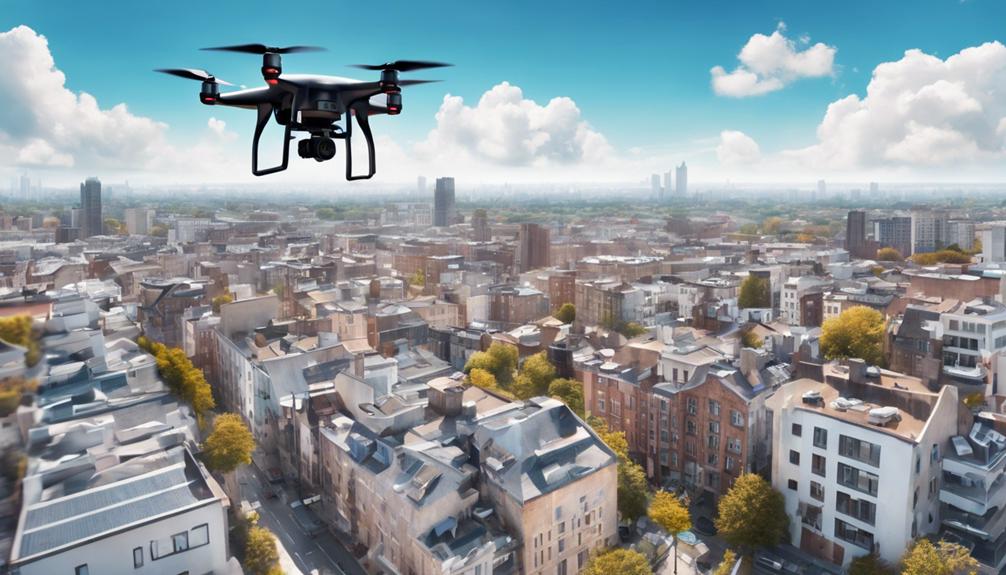
As we navigate the complexities of modern logistics, it's becoming increasingly clear that drones are poised to revolutionize the last mile of delivery, where the highest costs and inefficiencies often occur. We're not just talking about shaving off a few minutes here and there; we're talking about a fundamental shift in how we approach the entire delivery process.
Traditionally, the last mile has been a logistical nightmare, with traffic congestion, parking headaches, and labor-intensive delivery processes driving up costs and frustration levels. But drones are changing the game. With their ability to bypass traffic, navigate through densely populated areas, and reach remote locations with ease, they're opening up new possibilities for fast, efficient, and cost-effective delivery.
We're no longer limited by traditional infrastructure; we can create our own routes, our own schedules, and our own delivery networks. And with advanced sensors and AI-powered navigation, we can make certain that our drones are always flying safely and efficiently, minimizing the risk of accidents or errors. The potential is enormous, and we're just starting to scratch the surface of what's possible. As we continue to push the boundaries of drone technology, we'll open up new opportunities for businesses and consumers alike, and redefine the very fabric of modern logistics.
Increased Efficiency and Productivity
By cutting out the need for traditional infrastructure and labor-intensive delivery processes, we're freeing up resources to focus on what really matters: streamlining our operations and amplifying our productivity. Drones are revolutionizing the way we approach logistics and delivery, and it's about time we reap the benefits.
We're no longer bogged down by traffic congestion, parking nightmares, or lengthy delivery routes. With drones, we can bypass these hurdles and get products to customers faster than ever before. This means we can process more orders, serve a wider customer base, and respond to changing market demands with greater agility.
Our operations are becoming leaner and meaner, with drones taking on tasks that would otherwise require significant manpower and resources. We're automating tasks, reducing manual labor, and minimizing the risk of human error. This isn't just about shaving off minutes or hours – it's about transforming the very fabric of our logistics and delivery networks.
The result? We're witnessing unprecedented levels of efficiency and productivity. Orders are fulfilled faster, customers are happier, and we're enjoying a competitive edge in the market. As we continue to refine and perfect our drone-based delivery systems, we're confident that the future of logistics and delivery services has never looked brighter.
Cost Savings and Environmental Impact

We're slashing operational costs and reducing our carbon footprint simultaneously, thanks to drones' remarkable ability to eliminate fuel-guzzling trucks and minimize packaging waste. This is a game-changer for our industry, as we're constantly looking for ways to optimize our logistics and delivery services. By leveraging drone technology, we're able to cut costs associated with traditional transportation methods, such as fuel, maintenance, and labor.
Here are just a few ways drones are helping us save money and the environment:
- Reduced fuel consumption: With drones, we're no longer reliant on gas-guzzling trucks to transport goods. This not only reduces our carbon footprint but also saves us money on fuel costs.
- Minimized packaging waste: Drones allow us to transport smaller, more precise shipments, reducing the need for excessive packaging materials.
- Lower labor costs: With autonomous drones, we're reducing our reliance on human labor, which in turn reduces labor costs.
- Increased route efficiency: Drones can take the most direct route, reducing travel time and increasing delivery speed.
Overcoming Traditional Logistics Challenges
Traditional logistics challenges, such as traffic congestion, infrastructure limitations, and rural area access, have long plagued our industry, but drones are revolutionizing the way we overcome these hurdles. We're no longer held back by the constraints of traditional transportation methods, where traffic jams and road closures can bring our operations to a standstill. With drones, we can soar above these obstacles, ensuring timely and efficient delivery of goods.
We're not limited by infrastructure, either. Drones can reach remote areas, where traditional logistics networks often struggle to penetrate. This means we can extend our reach, serving customers in hard-to-access regions, and expanding our market share in the process. Additionally, drones can navigate through complex terrain, such as mountains or islands, where traditional logistics would be impractical or impossible.
Rural areas, in particular, benefit from drone-based logistics. We can now deliver essential goods, like medicine and groceries, to these underserved communities, improving their quality of life. In addition, drones enable us to respond quickly to emergencies, such as natural disasters, by rapidly deploying critical supplies. By harnessing the power of drones, we're breaking free from the shackles of traditional logistics, opening up new opportunities for growth, and redefining the possibilities of modern logistics.
Drone Technology and Innovation

Advancements in drone technology have propelled the logistics industry forward, allowing us to tap into unprecedented levels of efficiency, precision, and reliability. As we continue to push the boundaries of innovation, we're witnessing a transformation in the way goods are delivered and received.
At the heart of this revolution are cutting-edge drone designs, advanced sensors, and sophisticated software. These components have enabled us to overcome traditional logistics challenges and access new possibilities. For instance: drones equipped with AI-powered navigation systems can deliver critical supplies to remote locations with greater speed and accuracy. Additionally, robotics in manufacturing has streamlined the production of these drones, enhancing efficiency and reducing costs. As a result, industries ranging from healthcare to e-commerce are leveraging this technology to optimize their supply chains.
- Autonomous navigation: Equipped with AI-powered sensors, drones can now navigate complex environments with ease, avoiding obstacles and ensuring precise delivery.
- Enhanced payload capacity: Advances in materials science have led to the development of lighter, stronger materials, allowing drones to carry heavier payloads over longer distances.
- Real-time tracking: Integrated GPS and IoT sensors enable real-time tracking, providing customers with up-to-the-minute updates on their packages.
- Swarm intelligence: Flocking algorithms enable multiple drones to work in tandem, efficiently covering large areas and optimizing delivery routes.
These innovations have opened up new avenues for logistics providers, enabling them to streamline operations, reduce costs, and enhance customer satisfaction. As drone technology continues to evolve, we can expect to see even more transformative changes in the logistics landscape.
Safety and Regulatory Considerations
As we explore the field of drone-based logistics, concerns about safety and regulatory compliance take center stage, prompting us to scrutinize the measures in place to prevent accidents and guarantee adherence to emerging standards. Ensuring the safe operation of drones is vital, as a single mishap could have devastating consequences. To mitigate these risks, we must examine the current regulatory landscape and identify areas for improvement.
| Regulatory Body | Key Regulations |
|---|---|
| Federal Aviation Administration (FAA) | Part 107: Rules for small UAS operations, including altitude and speed restrictions |
| European Union Aviation Safety Agency (EASA) | EU Regulation 2019/947: Harmonizes drone regulations across EU member states |
| International Civil Aviation Organization (ICAO) | Annex 13: Guidelines for drone safety and security |
We must also consider the importance of airworthiness certification, pilot training, and maintenance protocols. Moreover, we need to address the potential risks of drone misuse, such as cyber attacks or unauthorized surveillance. By acknowledging these challenges, we can work towards establishing a robust regulatory framework that balances innovation with safety and security. Ultimately, our goal is to create a safe and reliable drone-based logistics system that benefits both businesses and consumers alike.
Potential Applications and Use Cases

How will drones transform the logistics landscape, and what innovative applications will emerge as this technology takes flight? As we explore the potential of drones in modern logistics and delivery services, we're excited to uncover the vast possibilities that this technology has to offer.
One area where drones are likely to make a notable impact is in last-mile delivery. With the ability to navigate through congested urban areas and reach remote locations, drones can notably reduce delivery times and increase efficiency. But that's not all – drones can also be used for:
- Inventory management: Drones equipped with cameras and sensors can quickly and accurately scan inventory levels, making it easier to manage stock and reduce waste.
- Infrastructure inspection: Drones can be used to inspect critical infrastructure such as bridges, roads, and pipelines, reducing the need for manual inspections and improving safety.
- Supply chain optimization: Drones can help optimize supply chain operations by providing real-time visibility into inventory levels, shipment tracking, and demand forecasting.
- Disaster response: Drones can quickly respond to natural disasters, providing critical supplies and aid to affected areas.
As we continue to explore the potential of drones in logistics and delivery services, we're likely to uncover even more innovative applications. With their ability to increase efficiency, reduce costs, and improve safety, drones are poised to revolutionize the way we think about logistics and delivery.
The Future of Drone Delivery
We're now examining the future of drone delivery, where we'll see a rapid increase in the adoption of autonomous aerial vehicles, transforming the way we receive goods and services. As the technology advances, we'll witness a significant shift in the logistics and delivery services landscape. With drones capable of maneuvering through congested urban areas, traversing through narrow alleys, and reaching remote locations, the possibilities are endless.
| Benefit | Description | Impact |
|---|---|---|
| Faster Delivery | Reduced delivery times by up to 90% | Increased customer satisfaction |
| Increased Accessibility | Reaching remote or hard-to-reach areas | Improved quality of life for underserved communities |
| Reduced Costs | Lower operational costs compared to traditional methods | Increased profit margins for businesses |
| Enhanced Safety | Reduced risk of accidents and injuries | Improved safety for delivery personnel and pedestrians |
| Environmental Benefits | Reduced carbon footprint and emissions | Contribution to a more sustainable future |
As we look to the future, we can expect to see drones become an integral part of our daily lives, revolutionizing the way we receive goods and services. With the potential to transform the logistics and delivery services industry, drones are poised to change the game, and we're excited to be a part of this revolution.
Frequently Asked Questions
Can Drones Be Used in Delivery During Bad Weather Conditions?
"Like Icarus defying the skies, we ponder if drones can brave the tempests and deliver in bad weather. The answer is yes, with advanced sensors and GPS, they can navigate through rain, snow, or wind. But, it's not just about tech – it's about precision and adaptability. We've seen it in military ops, now it's time to bring it to civilian skies. The future of delivery is here, and it's weather-proof."
How Do Drones Navigate and Avoid Obstacles in Flight?
We're pushing the limits of drone navigation, and we're excited to share how they avoid obstacles in flight. Using a combo of GPS, sensors, and cameras, our drones create a 3D map of their surroundings in real-time. This allows them to detect and adapt to obstacles, making swift adjustments to their flight path. We're talking about precision navigation, folks!
Are Drones Equipped With Advanced Security Features for Cargo?
'We've seen it with companies like UPS, where drones are equipped with advanced security features like biometric authentication and GPS tracking to guarantee cargo safety. For instance, UPS's Flight Forward program uses drones with tamper-evident containers to securely transport medical samples. We believe these features are essential to prevent cargo theft and tampering, giving customers peace of mind when using drone delivery services.'
Can Customers Track Their Drone-Delivered Packages in Real-Time?
We're thrilled to report that, yes, customers can track their drone-delivered packages in real-time. We've made it a priority to provide transparent and seamless experiences. Through our mobile app or website, customers can access live updates on their package's location, flight path, and estimated delivery time. We're committed to keeping our customers informed every step of the way, ensuring a sense of control and confidence in our drone delivery services.
Will Drone Delivery Replace Human Delivery Personnel Entirely?
We're not convinced that drone delivery will completely replace human delivery personnel. While drones will unquestionably revolutionize logistics, they can't replicate the intricate tasks humans perform. We'll still need humans for tasks like handling fragile items, maneuvering through complex delivery routes, and providing customer service. Drones will augment human capabilities, not replace them, creating a hybrid model that leverages the strengths of both.
