
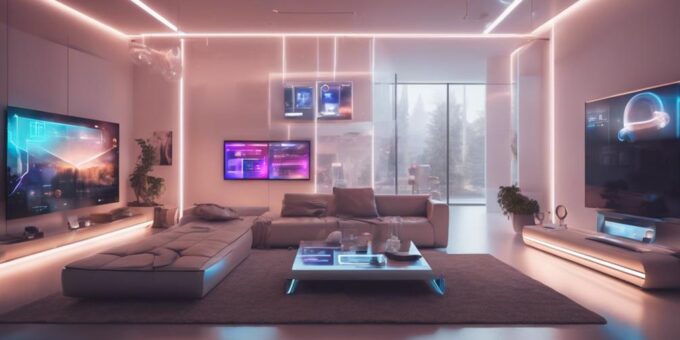
As smart home technology advances, innovative trends are reshaping the future of living spaces. Sustainable energy solutions, driven by climate change awareness, are reducing carbon footprints through solar panels, wind turbines, and geothermal energy. Voice-controlled technology is improving with multi-room control and contextual language understanding. Biometric security systems, such as facial recognition and fingerprint scanning, guarantee enhanced security. Meanwhile, smart home automation hubs are streamlining device management, and wellness-focused environments are prioritizing mental and physical well-being. As the smart home landscape evolves, exciting innovations await – and the best is yet to come.
Sustainable Energy Harvesting
As the world shifts towards a more eco-friendly future, sustainable energy harvesting is becoming an essential aspect of smart home technology, enabling homeowners to reduce their carbon footprint and reliance on non-renewable energy sources. This shift is driven by the increasing awareness of climate change and the need to reduce our impact on the environment. Smart homes are now being designed to integrate sustainable energy harvesting systems, such as solar panels, wind turbines, and geothermal energy systems.
These systems allow homeowners to generate their own clean energy, reducing their reliance on the grid and lowering their energy bills. Additionally, smart home technology enables homeowners to monitor and control their energy usage in real-time, optimizing their energy consumption and reducing waste. With the ability to track energy usage and production, homeowners can make informed decisions about their energy consumption, making sustainable living easier and more achievable.
Furthermore, sustainable energy harvesting in smart homes also increases energy independence, allowing homeowners to generate their own energy and reducing their reliance on external energy sources. This not only reduces energy costs but also provides a sense of freedom and autonomy. As the world continues to shift towards a more sustainable future, sustainable energy harvesting is set to play an important role in the development of smart homes, enabling homeowners to live more sustainably and independently.
Voice-Controlled Everything
As smart homes continue to evolve, voice-controlled technology is becoming increasingly prevalent, allowing homeowners to effortlessly manage their living spaces. With voice activation methods advancing rapidly, residents can now seamlessly control various aspects of their homes with simple voice commands. From adjusting lighting and temperature to controlling entertainment systems, voice-controlled everything is revolutionizing the way people interact with their living environments.
Voice Activation Methods
Smart home devices are increasingly relying on voice activation methods to control everything from lighting and temperature to entertainment and security systems. This trend is driven by the desire for convenience, flexibility, and freedom in managing one's living space. With voice activation, homeowners can effortlessly command their devices to perform various tasks, creating a seamless and all-encompassing hands-free experience.
Some key advancements in voice activation methods include:
- Multi-room control: Voice assistants can now control devices in multiple rooms, allowing for a more inclusive smart home experience.
- Contextual understanding: Voice assistants are becoming more adept at understanding natural language, enabling users to issue complex commands and receive accurate responses.
- Multi-language support: Voice activation methods are expanding to support various languages, making smart homes more accessible to a global audience.
- Improved noise reduction: Advanced noise reduction algorithms are being developed to enhance voice recognition accuracy in noisy environments.
- Enhanced security: Voice activation methods are incorporating advanced security protocols to protect users' personal data and prevent unauthorized access.
Seamless Room Control
Harmony reigns in the smart home of the future, where voice-controlled devices orchestrate a seamless symphony of light, sound, and temperature, effortlessly responding to every command in every room. With seamless room control, homeowners can effortlessly manage their living space, freeing them from the constraints of manual operation. A simple voice command can adjust the ambiance, illuminating the room with the perfect brightness, tuning into a favorite playlist, or creating the ideal temperature for relaxation.
This advanced technology empowers individuals to take control of their surroundings, tailoring their environment to suit their unique preferences. Whether it's creating a cozy atmosphere for a movie night or energizing the space for a morning workout, voice-controlled devices respond promptly to every command. The smart home of the future is a sanctuary of convenience, where technology blends seamlessly into the background, liberating individuals to focus on what matters most – living life to the fullest.
Biometric Security Systems
Integrating biometric security systems into smart homes enables residents to ditch cumbersome keys and passwords, instead relying on unique physical characteristics to safeguard their living spaces. This innovative approach to home security provides unparalleled convenience and flexibility, as homeowners can effortlessly access their homes without the hassle of remembering passwords or carrying physical keys.
Biometric security systems utilize advanced technologies such as facial recognition, fingerprint scanning, and voice recognition to authenticate identities and grant access. This not only enhances security but also provides a seamless and intuitive experience for homeowners.
Some key benefits of biometric security systems include:
- Enhanced security: Biometric authentication is virtually impossible to replicate, making it an extremely secure method of access control.
- Convenience: Homeowners no longer need to remember passwords or carry physical keys, providing unparalleled freedom and flexibility.
- Customization: Biometric security systems can be tailored to accommodate multiple users, allowing homeowners to grant access to specific individuals or groups.
- Integration: Biometric security systems can seamlessly integrate with other smart home devices, providing a complete and interconnected security solution.
- Scalability: Biometric security systems can be easily scaled up or down to accommodate changing needs and requirements.
Smart Home Automation Hubs
As biometric security systems streamline access control, homeowners are turning to smart home automation hubs to centralize and simplify the management of their smart devices. These hubs serve as the brain of the smart home, integrating various devices and systems to create a seamless and efficient living experience. By consolidating control of lighting, temperature, entertainment, and security systems, homeowners can effortlessly manage their smart home from a single interface.
Smart home automation hubs also enable voice control, allowing homeowners to issue commands and receive information using voice assistants like Alexa or Google Assistant. This hands-free control enhances the smart home experience, providing an unprecedented level of convenience and flexibility. Additionally, automation hubs can learn a homeowner's habits and preferences, adjusting settings to optimize energy efficiency and comfort.
The rise of smart home automation hubs has also sparked innovation in device compatibility and interoperability. Manufacturers are now designing devices that can seamlessly integrate with various hubs, ensuring a cohesive and user-friendly experience. As the smart home market continues to evolve, automation hubs will play an essential role in unifying the fragmented landscape of smart devices, granting homeowners the freedom to design their ideal living space.
Wellness-Focused Ambient Environments
They're creating wellness-focused ambient environments by incorporating calming colors, soothing scents, and natural sounds into their smart home designs. This holistic approach prioritizes residents' mental and physical well-being, fostering a sense of calm and relaxation in the comfort of their own homes. By seamlessly integrating these elements, smart homes are evolving into serene oases that nurture both body and mind.
Some notable features of these wellness-focused ambient environments include:
- Mood-enhancing lighting: Tunable LED lighting systems that simulate natural daylight, promoting a sense of energy and vitality during the day, and gradually shifting to calming warm tones in the evening.
- Air quality monitoring: Advanced sensors that continuously monitor and adjust indoor air quality, ensuring a healthy and invigorating environment.
- Nature-inspired soundscapes: Discreetly integrated sound systems that mimic the soothing sounds of nature, such as gentle rainfall or ocean waves, to create a calming atmosphere.
- Aromatherapy integration: Built-in essential oil diffusers that release calming scents, such as lavender or chamomile, to promote relaxation and reduce stress.
- Biophilic design: Strategically placed living walls, green roofs, or indoor gardens that bring the outdoors in, fostering a deeper connection with nature and promoting a sense of well-being.
AI-Powered Home Maintenance
Smart homeowners can now rely on AI-powered home maintenance systems to detect and address potential issues before they become major problems. These advanced systems utilize machine learning algorithms to monitor various aspects of the home, including electrical and plumbing systems, HVAC, and appliances. By analyzing real-time data, AI-powered home maintenance systems can identify anomalies and predict potential failures, allowing homeowners to take proactive measures to prevent costly repairs.
For instance, an AI-powered system can detect a slow leak in the plumbing system, alerting the homeowner to take action before significant water damage occurs. Similarly, it can identify inefficient energy consumption patterns, providing recommendations to optimize energy usage and reduce waste. These systems can also integrate with popular voice assistants, enabling homeowners to receive voice notifications and schedule maintenance appointments with ease.
Moreover, AI-powered home maintenance systems can learn a home's unique patterns and adapt to its specific needs over time. This personalized approach enables homeowners to enjoy a greater sense of freedom, knowing their home is being monitored and maintained with precision. As the technology continues to evolve, smart homeowners can expect even more innovative features and benefits, further enhancing their overall living experience.
Seamless IoT Device Integration
Homeowners can effortlessly connect and manage a multitude of IoT devices, from thermostats and security cameras to appliances and lighting systems, thanks to seamless integration capabilities. This integration enables a unified and streamlined smart home experience, where devices can communicate with each other and be controlled remotely through a single interface.
Seamless IoT device integration offers numerous benefits, including:
- Enhanced convenience: Homeowners can control and monitor their devices from a single app, eliminating the need to switch between multiple apps.
- Improved energy efficiency: IoT devices can optimize energy consumption by automatically turning off lights and appliances when not in use.
- Enhanced security: Integrated security systems can detect potential threats and alert homeowners in real-time.
- Increased customization: Homeowners can create customized scenes and routines that combine multiple devices to create a personalized experience.
- Scalability: Seamless integration allows homeowners to easily add or remove devices as their needs change.
Personalized Living Spaces
As smart home technology advances, residents can expect tailored experiences that cater to their unique preferences and needs. Through innovative applications of artificial intelligence and machine learning, homes will learn to adapt to individual habits and lifestyles, creating a truly personalized living space. By integrating smart devices and sensors, residents can enjoy a seamless and intuitive living experience that mirrors their distinct personality and style.
Tailored Experiences Through Tech
Residents can curate a living space that mirrors their unique preferences, thanks to advanced technologies that seamlessly integrate into daily life. With the help of cutting-edge innovations, homeowners can tailor their living spaces to fit their individual needs and desires.
- Smart lighting systems adjust brightness and color based on the time of day, a person's mood, or the activity they're engaged in.
- Voice assistants learn a homeowner's habits and preferences, making suggestions and adjustments to create a more comfortable environment.
- AI-powered temperature control guarantees that the perfect temperature is maintained, no matter the time of day or season.
- Personalized entertainment systems recommend music, movies, and TV shows based on a homeowner's viewing history and preferences.
- Advanced scent dispensers release fragrances that enhance a person's mood, energy levels, or relaxation, creating a truly bespoke atmosphere.
Smart Home, Smart You
Personalized living spaces come alive when cutting-edge technologies converge, allowing individuals to craft a tailored environment that mirrors their unique personality, lifestyle, and preferences. This fusion of innovation and creativity empowers homeowners to break free from the constraints of traditional living spaces, embracing a world of limitless possibilities.
Smart home systems seamlessly integrate with wearable devices, tracking biometric data to adjust lighting, temperature, and ambiance according to an individual’s mood, energy levels, and daily routines. Voice assistants, infused with AI-driven insights, learn and adapt to a person’s habits, offering tailored recommendations for entertainment, relaxation, and even health and wellness. These advancements enhance convenience and contribute to overall well-being by creating a responsive living environment that fosters comfort and efficiency. Additionally, smart home ecosystems can support telemedicine in home health care by monitoring vital signs, sending alerts to medical professionals, and assisting with medication reminders. As technology continues to evolve, these intelligent systems will play an increasingly vital role in promoting a healthier and more connected lifestyle.
As a result, personalized living spaces become an extension of one's personality, fostering a deeper sense of autonomy and control. With the ability to curate an environment that truly reflects their identity, individuals can unapologetically be themselves, free from the shackles of conformity. The smart home of the future is not just a residence – it's a sanctuary, a haven where freedom of expression knows no bounds.
Frequently Asked Questions
How Will Smart Homes Address Privacy Concerns and Data Security?
She prioritizes safeguarding personal data in her smart home by opting for devices with robust encryption and secure authentication protocols. She consistently updates her devices' software to guarantee she has the latest security patches. Additionally, she chooses devices from reputable manufacturers that adhere to strict data protection policies, minimizing the risk of unauthorized access to her sensitive information.
Can Smart Home Devices Be Integrated With Existing Home Infrastructure?
She can seamlessly integrate smart home devices with existing infrastructure using hubs or bridges. This allows devices from different manufacturers to communicate, creating a unified system. For instance, smart thermostats can sync with existing heating systems, while smart lighting can integrate with existing electrical infrastructure. This integration enables homeowners to control and automate various aspects of their home, enhancing convenience and efficiency.
Will Smart Homes Increase or Decrease My Electricity Bill?
Will smart homes drain her wallet or save her money? The answer hangs in the balance. On one hand, smart devices like thermostats and lights can optimize energy usage, slashing electricity bills. On the other, always-connected devices and data-hungry gadgets might guzzle power. The verdict? It depends on her smart home setup and habits. If she's mindful of her energy consumption, smart homes can be a cost-effective haven.
Can Smart Home Systems Be Controlled Remotely When I'm Away?
She can control her smart home systems remotely when she's away, thanks to mobile apps and internet connectivity. This allows her to turn lights on and off, adjust thermostat settings, and even monitor security cameras from her smartphone or tablet. Whether she's at work or on vacation, she can stay connected to her home and make adjustments in real-time, giving her peace of mind and convenience.
Are Smart Home Devices Compatible With All Types of Internet Connections?
She can rest assured that smart home devices are compatible with various internet connections. Most devices support Wi-Fi, Ethernet, or a combination of both. Some devices even work with cellular networks or satellite internet. However, it's crucial to verify the device's specifications to confirm compatibility with her specific internet connection. Generally, smart home devices adapt to different internet speeds and types, providing her with the freedom to choose her preferred connection.
