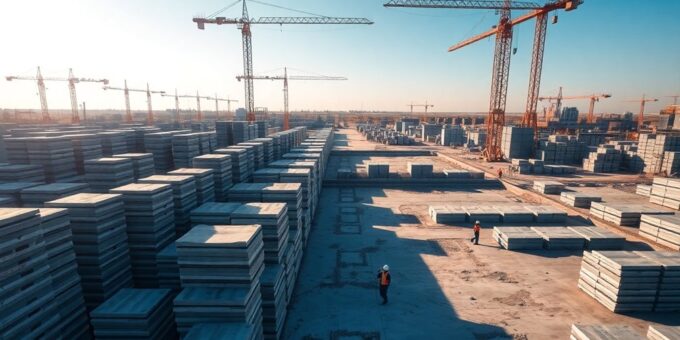
You might not realize that concrete is one of the most versatile materials used in industrial construction today. Its ability to withstand heavy loads and harsh conditions makes it a go-to choice for warehouses and manufacturing facilities. Nevertheless, not all concrete is created equal, and selecting the right type for your specific project can greatly impact performance and cost. Let’s explore the options available and how they can benefit your next industrial endeavor.
Article Highlights
- Choose high-strength concrete for heavy load support, ensuring durability and cost efficiency in industrial designs.
- Implement reinforced and precast concrete to enhance tensile strength and expedite construction timelines.
- Opt for slip-resistant surfaces in flooring solutions to improve safety and reduce accident risks in industrial environments.
- Utilize self-compacting and fiber-reinforced concrete to minimize labor needs and extend the service life of heavy-duty applications.
- Regular maintenance and effective curing techniques are essential to prolong the longevity and performance of industrial concrete structures.
The Role of Concrete in Industrial Construction
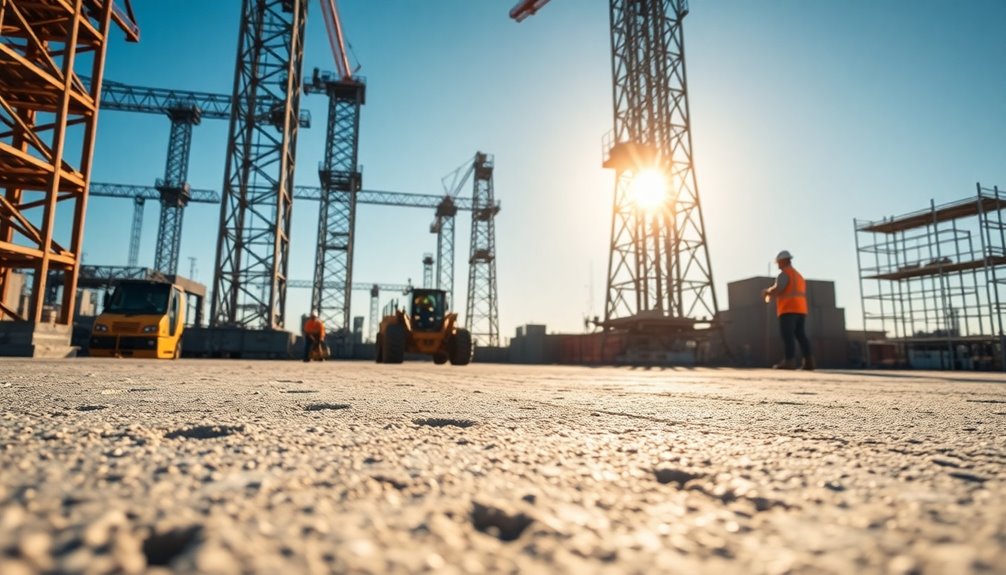
When you’re considering materials for industrial construction, concrete stands out for its durability and high performance. This choice not solely meets the demands of heavy loads and harsh environments but additionally improves safety and efficiency. Comprehending the key factors influencing concrete selection can help you make informed decisions for your projects.
Importance of durable, high-performance materials
Although you may not realize it, the choice of durable, high-performance materials like concrete is vital in industrial construction. Concrete’s exceptional durability allows it to withstand heavy loads and harsh conditions, making it ideal for warehouses and manufacturing facilities. High-performance concrete resists moisture, chemicals, and temperature fluctuations, guaranteeing your infrastructure lasts in demanding environments. Well-designed concrete foundations and flooring solutions not only provide stable, slip-resistant surfaces but furthermore minimize vibrations, enhancing the stability of your machinery. This leads to improved operational efficiency. Moreover, concrete’s low maintenance requirements contribute to reduced lifecycle costs, making it a cost-effective choice for your industrial projects. Investing in durable materials like concrete guarantees your facility remains safe and efficient for years to come.
Why concrete is the preferred choice for industrial applications
Concrete’s exceptional strength and versatility make it the go-to choice for industrial applications, especially in environments demanding high durability and safety. With its ability to withstand heavy loads and extreme conditions, concrete guarantees structural integrity in various industrial settings. Its low maintenance requirements mean you won’t face frequent repairs or replacements, ultimately lowering long-term operational costs. Furthermore, concrete’s inherent fire-resistant properties improve safety, minimizing the risks of fire-related incidents. The material’s flexibility allows for diverse applications, from flooring to foundations and loading docks, customized to meet specific operational needs. This adaptability, combined with efficient design solutions, provides a solid framework for flexible project delivery, making concrete an ideal choice for any industrial construction project. We asked a local montreal industrial concrete slab contractor some of the factors that determtermine the selection of concrete. Here’s what they shared with us:
Key factors influencing concrete selection
Selecting the right type of concrete for industrial projects involves several key factors that directly impact performance and longevity. You’ll need to take into account load-bearing capacity, durability, safety considerations, and cost-effectiveness to guarantee successful outcomes. Here’s a quick overview:
| Factor | Importance | Considerations |
|---|---|---|
| Load-Bearing Capacity | Supports heavy machinery operations | Must meet project specifications |
| Durability | Withstands harsh conditions and wear | Requires appropriate concrete mix |
| Safety Considerations | Prevents accidents with slip-resistant surfaces | crucial for operational efficiency |
| Cost-Effectiveness | Reduces long-term maintenance and repair costs | Invest in quality materials upfront |
Types of Concrete for Industrial Applications
In relation to industrial applications, choosing the right type of concrete is crucial for ensuring performance and longevity. You’ll find options like high-strength and reinforced concrete that can handle heavy loads and dynamic stresses. Furthermore, specialty mixes like self-compacting and fiber-reinforced concrete offer unique benefits customized to specific project needs.
High-strength concrete
Even though many construction projects rely on standard concrete, high-strength concrete stands out for its ability to support heavy loads and thrive in demanding industrial environments. With a compressive strength of 6,000 psi or higher, it greatly surpasses the 3,000 psi typical of conventional concrete, making it perfect for industrial applications like warehouses and manufacturing facilities. Its formulation includes a lower water-to-cement ratio, leading to increased density and durability, which helps resist cracking and deterioration over time. Moreover, high-strength concrete often incorporates supplementary cementitious materials such as fly ash or silica fume, enhancing its performance. By using high-strength concrete, you can reduce the thickness of structural elements, allowing for more efficient designs and potential cost savings in your construction project.
Reinforced concrete
Building on the advantages of high-strength concrete, reinforced concrete offers even greater benefits for industrial applications. By embedding steel bars or mesh within the concrete mix, it achieves improved tensile strength, making it ideal for areas like loading docks and warehouse floors that endure heavy loads. Its ability to resist cracking guarantees longevity, even under extreme conditions and with heavy machinery. Furthermore, with the option to incorporate customized additives, you can augment properties like durability and moisture resistance, tailoring it to your specific needs. Reinforced concrete additionally allows for longer spans without requiring additional support structures, optimizing space utilization in your industrial setting. This makes it a smart choice for robust, efficient infrastructure.
Precast concrete
Precast concrete stands out as a versatile solution for industrial applications, offering numerous advantages over traditional methods. Manufactured in a controlled factory environment, precast concrete guarantees superior quality control and reduced curing times. You’ll find various types, such as precast panels, beams, columns, and slabs, customized to meet specific structural needs. This method considerably expedites construction schedules, as components arrive ready for installation, minimizing labor costs and project timelines. Moreover, precast concrete improves durability and sustainability, often utilizing a high-strength mix and incorporating recycled materials. Its flexibility in design allows for intricate shapes that accommodate diverse industrial facility requirements during maintaining structural integrity. Embracing precast concrete can lead to efficient, long-lasting solutions.
Self-compacting concrete
As construction projects become increasingly complex, self-compacting concrete (SCC) emerges as a game-changer for industrial applications. This highly flowable concrete spreads effortlessly, filling formwork without mechanical vibration, which is crucial for intricate designs. With its higher powder content and specific admixtures, SCC improves viscosity and flow, ensuring uniform density and enhanced durability. You’ll appreciate how it minimizes labor costs by reducing the need for vibration and finishing work, leading to quicker project completion times. Additionally, its resistance to cracking makes it ideal for heavy-duty flooring and reinforced structures. In environments with limited access or detailed requirements, self-compacting concrete truly stands out, providing a reliable solution that meets the demands of modern industrial construction.
Fiber-reinforced concrete
Fiber-reinforced concrete (FRC) offers a compelling advantage for industrial applications by integrating fibrous materials like steel, glass, or synthetic fibers to bolster its structural integrity. This innovative concrete type considerably improves tensile strength, making it ideal for heavy-duty flooring and machinery foundations. You’ll appreciate how FRC reduces the likelihood of shrinkage cracks, improving durability even in harsh environments and under heavy traffic. By choosing fiber-reinforced concrete, you can expect lower maintenance costs and a longer service life for your structures, minimizing potential surface damage. Its versatility allows for customized solutions designed to meet your specific operational needs, ensuring your industrial projects stand the test of time as they maintain peak performance and safety.
Sustainable and green concrete options
During the pursuit of industrial projects, opting for sustainable and green concrete options can greatly reduce environmental impact without sacrificing performance. You can consider sustainable concrete options that incorporate recycled materials, like crushed concrete aggregates, to minimize your carbon footprint. Green concrete formulations often use supplementary cementitious materials such as fly ash or slag, enhancing durability as well as lowering cement content. Pervious concrete is another excellent choice, allowing for improved stormwater management and groundwater recharge, all in the process of maintaining load-bearing capabilities. Moreover, high-performance concrete mixes can be designed to reduce energy consumption during production and extend the lifespan of structures, further minimizing environmental impact. By choosing these options, you can create robust infrastructures that are both effective and eco-friendly.
Choosing the Right Concrete for Your Project
When choosing concrete for your project, it’s crucial to take into account factors like load-bearing capacity, durability, and resistance to environmental conditions. You’ll additionally want to reflect on cost-effectiveness and long-term maintenance, along with installation time and labor needs. Don’t forget to explore sustainable options that can help meet your project’s eco-friendly goals.
Load-bearing capacity and durability
Selecting the right concrete for your industrial project hinges on grasping its load-bearing capacity and durability. The load-bearing capacity is primarily determined by compressive strength, typically ranging from 2,500 psi to over 5,000 psi for heavy-duty applications. Durability is influenced by factors like the water-cement ratio and aggregate quality, which affect the long-term integrity of concrete structures. For demanding environments, high-performance concrete mixes that include additives like fly ash or silica fume can improve both load-bearing capacity and durability. Furthermore, proper reinforcement, such as rebar or fiber reinforcement, is crucial to support heavy machinery. Regular maintenance and correct construction techniques will help mitigate issues, ensuring your concrete structures stand the test of time.
Resistance to environmental and chemical exposure
Understanding load-bearing capacity and durability lays the groundwork for making informed decisions about concrete in industrial projects. You’ll need to evaluate the concrete’s resistance to environmental factors like moisture and temperature fluctuations, as these can affect its overall durability. In environments with potential chemical exposure, such as acids or solvents, specialized concrete mixes or additives are vital to improve resilience. Choosing high-performance concrete not only supports heavy machinery but also reduces wear and tear. Moreover, prioritize environmental sustainability by selecting mixes that incorporate recycled materials, enhancing resistance to aggressive chemicals while decreasing your project’s carbon footprint. Remember, proper curing and maintenance techniques play a significant role in achieving ideal resistance in your concrete applications.
Cost-effectiveness and long-term maintenance
Comprehending the cost-effectiveness of concrete for industrial projects is crucial, especially since choosing the right mix can lead to significant savings down the line. Durable concrete minimizes the need for long-term maintenance, as its low-maintenance nature means fewer repairs and replacements over time. By selecting high-quality concrete, you’ll improve load-bearing capabilities, which can eliminate the need for costly reinforcements. Furthermore, implementing value-engineering techniques during the selection process can optimize material usage and cut overall project costs without sacrificing structural integrity. This approach not only reduces initial expenses but also prolongs the lifespan of your structures, ensuring that your concrete projects remain efficient and cost-effective in the long run.
Installation time and labor considerations
When planning an industrial concrete project, comprehension of installation time and labor considerations is essential for keeping everything on track. Your installation time will depend on factors like the type of concrete mix, environmental conditions, and design complexity, often ranging from a few days to several weeks. Labor considerations are equally important; you’ll need skilled workers familiar with heavy machinery and specific concrete techniques to maintain project efficiency. The concrete contractor you choose should assess workforce availability and skill levels early on, as this can greatly impact timelines and costs. Plus, selecting the right concrete type, such as high-strength or quick-setting options, can speed up installation and reduce labor demands, helping you achieve your concrete needs efficiently.
Sustainability and eco-friendly options
As you consider your options for industrial concrete projects, it is essential to prioritize sustainability and eco-friendly materials. Choosing concrete that incorporates recycled materials like fly ash or slag not only reduces waste but improves strength and durability. Eco-friendly mixes often utilize lower carbon footprint materials, greatly cutting greenhouse gas emissions during production. Furthermore, opting for permeable concrete can enhance stormwater management and minimize soil erosion. Incorporating supplementary cementitious materials (SCMs) helps lower the amount of Portland cement needed, a major CO2 contributor. Finally, utilizing energy-efficient production methods and optimizing mix designs can lead to reduced energy consumption, ensuring your project aligns with sustainability goals while maintaining performance and resilience.
Specialized Applications in Industrial Settings
In regard to specialized applications in industrial settings, you need concrete solutions that can handle heavy-duty demands. From anti-slip coatings to structural concrete for warehouses, each option plays a crucial role in ensuring safety and efficiency. Let’s explore how these customized solutions can meet the unique challenges of your industrial projects.
Heavy-duty industrial flooring solutions
Heavy-duty industrial flooring solutions are vital for any facility that relies on heavy machinery and constant movement. These systems are designed for durability, capable of withstanding significant weight and impact. You’ll benefit from slip-resistant surfaces that improve safety, especially in areas prone to spills or wet conditions. Customized flooring can be modified to meet your specific operational needs, ensuring ideal load-bearing capacities and functionality. With improved resistance to abrasion, chemicals, and thermal shock, these flooring solutions promise longevity in demanding environments. Furthermore, properly constructed industrial flooring helps reduce vibration and noise, creating a safer, more comfortable working atmosphere. Investing in heavy-duty flooring is fundamental for maintaining efficiency and safety in your industrial operations.
Anti-slip and abrasion-resistant coatings
In industrial settings where safety is paramount, anti-slip and abrasion-resistant coatings are vital for protecting both workers and surfaces. These anti-slip coatings improve workplace safety by providing high traction, reducing the risk of slips and falls in high-traffic areas. Furthermore, abrasion-resistant coatings shield concrete from wear and tear caused by heavy machinery and foot traffic, prolonging the flooring’s lifespan. They can withstand harsh chemicals and environmental conditions, making them ideal for industries like manufacturing and warehousing. By using these specialized coatings, you can likewise meet regulatory safety standards, ensuring compliance with occupational safety requirements. Remember, regular maintenance and reapplication are fundamental to maintain their effectiveness, ensuring continued protection against slips and surface damage in industrial environments.
Structural concrete for warehouses and factories
During the construction of warehouses and factories, using structural concrete is vital for meeting the demanding requirements of these environments. It provides the durability and load-bearing capacity needed to support heavy machinery and inventory. By incorporating tilt wall construction techniques, you can achieve faster completion times and better space utilization in your industrial facilities. Furthermore, well-designed concrete foundations minimize vibrations and improve stability, ensuring safe operations. With high-quality structural concrete, your projects can withstand harsh conditions, making it a preferred choice for long-lasting durability. Incorporating innovative design practices not only boosts project efficiency but also reduces the likelihood of onsite issues, allowing for a smoother construction process and improved operational performance in your facilities.
Bridges and transportation infrastructure
Although bridges and transportation infrastructure are often overlooked, they play an important role in industrial settings where heavy loads and constant use are the norm. Concrete solutions are fundamental for constructing these structures, ensuring they can withstand harsh conditions and support significant weight. The use of reinforced concrete improves structural integrity, enabling longer spans and enhanced safety in busy industrial areas. Specialized applications like pre-stressed and post-tensioned systems optimize bridge performance under dynamic loads. Furthermore, effective drainage integrated into concrete designs helps prevent water accumulation, extending the lifespan of the infrastructure. Regular maintenance and inspection are crucial to identify wear, ensuring that your transportation infrastructure remains efficient and reliable in meeting the demands of industrial applications.
Energy and utility sector applications
During the process of traversing the intricacies of the energy and utility sector, you’ll find that concrete solutions play a vital role in guaranteeing operational safety and efficiency. Concrete pads provide stable foundations for heavy machinery, enhancing safety and functionality in demanding environments. Utilizing tilt wall concrete construction expedites project timelines while maintaining structural integrity, which is fundamental for facilities in this sector. Furthermore, industrial concrete solutions extend to the design of concrete loading docks, facilitating the smooth transport of goods important for energy production. With a focus on durability, these concrete services are customized to withstand harsh conditions, minimizing maintenance needs and promoting long-lasting performance. In the end, prioritizing safety guarantees secure operations around vehicle and pedestrian traffic.
Water treatment and containment structures
Though managing industrial wastewater can be challenging, effective water treatment and containment structures are vital for preventing environmental contamination. These structures, including tanks, basins, and dikes, must be designed to handle harsh chemicals and heavy loads, which is why you should use durable concrete materials. In your industrial projects, integrating advanced modeling techniques during the design process can help simulate flow dynamics and guarantee structural integrity under stress. Don’t overlook the importance of regular maintenance and inspection of these concrete structures; it’s fundamental for their longevity and functionality. By prioritizing these practices, you can safeguard your facility and the surrounding ecosystems as you secure compliance with regulatory standards. Mastering waste management also involves implementing proactive measures such as corrosion-resistant coatings and reinforcement strategies to extend the lifespan of concrete containment structures. Additionally, leveraging smart monitoring technologies can help detect early signs of wear and prevent costly failures. By adopting these best practices, industrial facilities can enhance sustainability while minimizing environmental risks.
Innovations in Concrete Technology
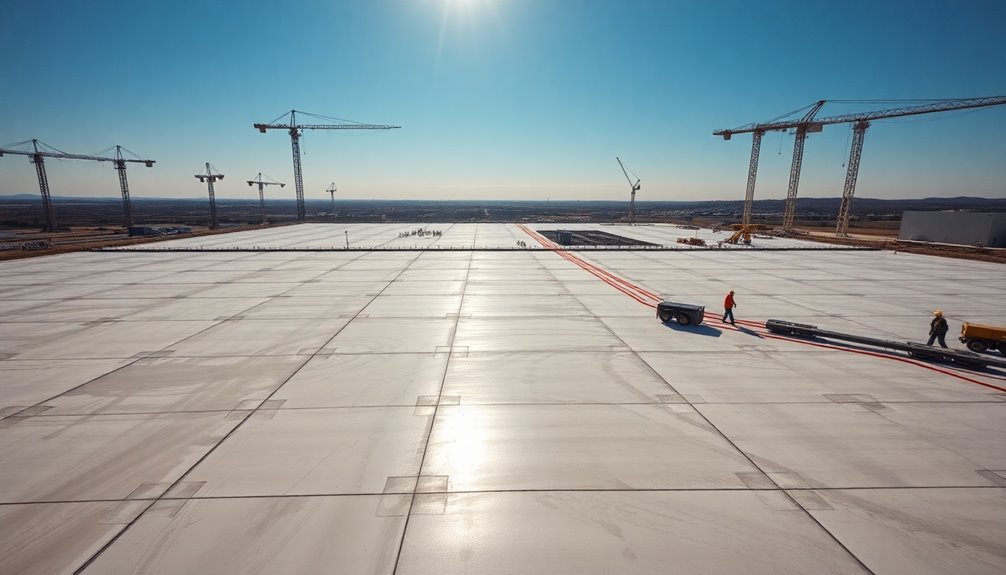
When you think about the future of concrete, innovations like smart concrete with self-healing properties and advanced admixtures are revolutionary. You’ll in addition find that 3D printing is transforming construction methods and lightweight concrete is meeting specialized needs. These advancements not merely improve performance but likewise promise to redefine how industrial projects are built and maintained.
Smart concrete with self-healing properties
As the demand for durable infrastructure grows, smart concrete with self-healing properties emerges as a groundbreaking solution for industrial projects. This innovative concrete incorporates microcapsules filled with healing agents that activate upon crack formation, effectively sealing them and extending the structure’s lifespan. Research shows that this smart concrete can heal itself multiple times, restoring up to 95% of its original strength, which considerably improves durability in industrial applications. By reducing the need for repairs, self-healing concrete promotes sustainable construction practices and minimizes raw material consumption. As it gets integrated into various industrial settings, you can expect increased safety, reduced downtime, and enhanced operational efficiency, making it an invaluable asset for modern infrastructure projects.
Advanced admixtures for enhanced performance
Incorporating advanced admixtures into concrete can dramatically improve its performance, especially in the demanding conditions of industrial projects. These innovative solutions augment durability and workability, ensuring your structures withstand heavy loads and harsh environments. Here are some key benefits:
- Polymer-based admixtures boost tensile strength, reducing cracking risks.
- Superplasticizers lower water content during maintaining workability, leading to higher strength and density.
- Specialty admixtures accelerate curing times, enabling faster construction cycles without compromising structural integrity.
- Innovative admixtures offer chemical resistance, crucial in environments exposed to corrosive substances.
3D printing in concrete construction
As the construction industry has long relied on traditional methods, 3D printing is revolutionizing concrete construction by introducing innovative techniques that boost efficiency and creativity. This additive manufacturing process allows you to create complex structures layer by layer, considerably reducing material waste and construction time. With 3D printing, you can achieve customized designs and shapes that would be challenging to realize using conventional methods, giving you greater architectural freedom. Plus, this technology improves durability by incorporating advanced mixtures that enhance strength and resistance to environmental factors. By decreasing labor costs by up to 50%, 3D printing paves the way for efficient construction and sustainable building solutions, addressing housing shortages and making your projects more viable and eco-friendly.
Lightweight concrete for specialized needs
Though traditional concrete offers strength, lightweight concrete presents a specialized solution for projects where reducing overall weight is crucial. This type of concrete is engineered to maintain durability during the reduction of structural load, making it perfect for unique applications. Here are some benefits of lightweight concrete:
- Enhanced Durability: Maintains strength while reducing the risk of cracking.
- Improved Compressive Strengths: Allows for thinner slabs without sacrificing performance.
- Energy Efficiency: Materials like expanded clay and pumice provide insulation benefits.
- Seismic Performance: Minimizes inertial forces during earthquakes, enhancing safety.
Using lightweight concrete can greatly decrease transportation costs and construction times, making it an innovative choice for industrial projects focused on efficiency and performance.
Best Practices for Industrial Concrete Installation
In terms of industrial concrete installation, getting the site preparation and curing techniques right is key to your project’s success. You’ll additionally want to be aware of common challenges that can arise and have strategies ready to tackle them. Plus, implementing effective maintenance practices will help guarantee your concrete remains durable and performs well over time.
Site preparation and curing techniques
To achieve a successful industrial concrete installation, effective site preparation and curing techniques are essential. Here are some best practices to follow:
- Site Preparation: Guarantee proper soil compaction and grading to create a stable foundation, reducing the risk of cracking and settling.
- Curing Techniques: Maintain moisture and temperature control during the curing period, typically ranging from 7 to 28 days, to achieve peak strength and durability.
- Joint Placement: Implement best practices for joint placement and spacing to control cracking and accommodate thermal expansion.
- Monitor Environmental Conditions: Regularly check humidity and temperature during curing to prevent premature drying and guarantee a successful process.
Common challenges and how to overcome them
Successful site preparation and curing techniques lay the groundwork for tackling common challenges in industrial concrete installation. By ensuring proper site preparation, including grading and drainage management, you can create a stable foundation that reduces future settlement issues. Opting for high-quality concrete mix designs customized to your specific needs will improve durability against heavy machinery and environmental stress. Implementing effective curing methods, like moisture retention, strengthens your concrete and boosts longevity. Don’t overlook regular inspection and maintenance of equipment during pouring and finishing to minimize defects. Finally, thorough project planning, with detailed scheduling and resource allocation, helps mitigate delays and improves overall efficiency. These best practices will pave the way for successful industrial concrete projects.
Maintenance strategies for longevity and performance
Although industrial concrete installations are designed to withstand heavy use, implementing effective maintenance strategies is crucial for guaranteeing their longevity and best performance. To keep your concrete surfaces in top shape, consider these key maintenance practices:
- Regular Inspections: Schedule periodic assessments to catch any wear or damage early.
- Sealing: Apply sealants to protect against moisture and prevent cracks.
- Drainage Maintenance: Verify drainage systems are functioning properly to avoid water accumulation, which can lead to erosion.
- Quality Repairs: Address any cracks or surface damage swiftly to maintain performance and prevent costly repairs later.
Frequently Asked Questions
What Are the Three Basic Construction Methods When Using Concrete?
The three basic construction methods using concrete are cast-in-place, precast, and tilt-up. Each method has its advantages, so consider factors like design flexibility, construction speed, and on-site labor needs when choosing the best option for your project.
Is Concrete a Profitable Business?
You might say concrete’s a goldmine in the construction world. With a booming market and consistent demand, investing in this sector can yield impressive profits, especially if you focus on quality and sustainable practices.
Who Are the Largest Concrete Companies in the US?
If you’re curious about the largest concrete companies in the U.S., you should look into CEMEX, Martin Marietta Materials, Vulcan Materials Company, CRH Americas, and Concrete Supply Co. They dominate the industry effectively.
What Is Concrete in Business?
You might think concrete’s just a dull gray slab, but in business, it’s a dynamo! It’s the backbone of countless projects, providing strength, durability, and a solid foundation for success in various industries, big and small.
