
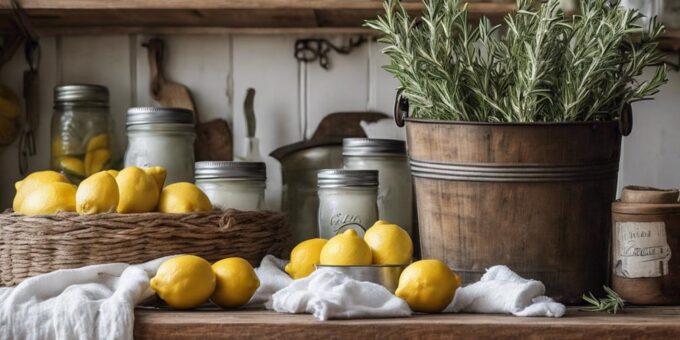
Ditch harsh chemicals and opt for natural cleaning agents that are safer for human health and the environment. Common household items like baking soda, vinegar, and lemon juice have antibacterial properties, while essential oils like tea tree oil and lavender oil have antimicrobial properties. Repurpose kitchen staples like baking soda, vinegar, and lemon juice as effective cleaning solutions. From scrubbing away tough stains to disinfecting surfaces, these natural ingredients can tackle common messes sustainably. By adopting these eco-friendly alternatives, you'll reduce exposure to harmful toxins and create a healthier home environment. Explore these natural solutions further to uncover a world of possibilities.
Natural Cleaning Agents At Home
Since many commercial cleaning products contain harsh chemicals that can negatively impact both human health and the environment, it is essential to explore the alternative of natural cleaning agents that can be easily sourced from home. These alternatives not only provide a safer and more environmentally friendly cleaning option but also offer a cost-effective solution for maintaining a clean and healthy living space. By utilizing natural cleaning agents, individuals can greatly reduce their exposure to harmful toxins and contribute to a more sustainable future. Additionally, natural cleaning agents can be just as effective as commercial products in disinfecting surfaces and eliminating germs without compromising indoor air quality. They can also play a role in learning how to handle household pests naturally, as certain ingredients like vinegar and baking soda help deter insects without the use of toxic pesticides. Embracing these eco-friendly alternatives not only promotes a healthier home but also supports a more sustainable lifestyle.
Common household items such as baking soda, vinegar, and lemon juice possess natural antibacterial and degreasing properties, making them ideal for cleaning surfaces, removing stains, and eliminating odors. Additionally, essential oils like tea tree oil and lavender oil possess antimicrobial properties, further enhancing their cleaning capabilities. By harnessing the power of these natural agents, individuals can create effective and eco-friendly cleaning solutions that prioritize both human health and environmental well-being.
Kitchen Ingredients Turned Cleaners
In the pursuit of a healthier and more sustainable cleaning routine, a treasure trove of effective cleaning agents can be found in the most unexpected of places: the kitchen. Common kitchen staples can be repurposed as natural cleaning solutions, eliminating the need for harsh chemicals and toxins.
- Baking Soda: A natural abrasive, baking soda can be used to scrub away tough stains and grout. Mix with water to create a paste, and apply to surfaces before rinsing with warm water.
- White Vinegar: A natural acid, white vinegar is effective at breaking down dirt and grime. Mix with water to create an all-purpose cleaner, or use full-strength to dissolve tough stains.
- Lemon Juice: A natural disinfectant, lemon juice can be used to sanitize surfaces and leave a fresh, citrusy scent. Mix with water to create a gentle cleaning solution, or apply full-strength to tough stains before rinsing with warm water.
DIY Disinfectants For A Germ-Free Home
Creating a germ-free home environment is essential for maintaining good health, and with a few simple ingredients, you can concoct effective DIY disinfectants that are gentle on surfaces yet tough on germs.
To get started, combine the following ingredients to create your own DIY disinfectants:
| Disinfectant | Ingredients |
|---|---|
| Hydrogen Peroxide Solution | 1 cup water, 1 tablespoon hydrogen peroxide, 1 teaspoon lemon juice |
| Tea Tree Oil Spray | 1 cup water, 10 drops tea tree oil |
| Baking Soda Paste | 2 tablespoons baking soda, 1 tablespoon water |
| Vinegar Solution | 1 cup water, 1/2 cup white vinegar |
These DIY disinfectants are easy to make and effective against germs and bacteria. The hydrogen peroxide solution is a natural alternative to bleach, while the tea tree oil spray has antibacterial properties. The baking soda paste is gentle on surfaces yet tough on grime, and the vinegar solution is a natural disinfectant.
Green Cleaning Solutions For Surfaces
Many households are switching to eco-friendly alternatives, opting for green cleaning solutions that are gentle on surfaces and the environment. This shift is driven by the growing awareness of the impact of harsh chemicals on our health and the planet.
Green cleaning solutions for surfaces are effective, non-toxic, and environmentally friendly. These solutions can be easily made at home using common household ingredients. Here are three examples:
- Baking Soda and Water Paste: A mixture of baking soda and water creates a gentle scrubbing paste perfect for countertops, sinks, and faucets.
- White Vinegar and Water Solution: A 50/50 solution of white vinegar and water is effective in cleaning mirrors, windows, and other glass surfaces.
- Castile Soap and Olive Oil Spray: A spray made from castile soap, olive oil, and water is a gentle and effective cleaner for wood surfaces, such as furniture and floors.
These green cleaning solutions are not only eco-friendly but also cost-effective and easy to make. By switching to these alternatives, you can reduce your carbon footprint and create a healthier living space for you and your loved ones.
Simple Recipes For Common Messes
From countertops to carpets, common messes can be a nuisance, but with a few simple recipes, you can tackle them effectively and sustainably. For instance, a mixture of equal parts white vinegar and water can effectively remove stubborn stains on carpets. For tougher stains, add a tablespoon of baking soda to the mixture and let it sit for 30 minutes before rinsing.
For grease and oil-based stains on surfaces, a solution of equal parts lemon juice and olive oil can be used. Apply the mixture to the stain, let it sit for 10-15 minutes, and wipe clean with a damp cloth. For odorous messes, such as pet accidents, a mixture of 1 cup of warm water, 1 tablespoon of white vinegar, and 1 teaspoon of baking soda can be used. Apply the mixture to the affected area, let it sit for 10-15 minutes, and blot dry with a clean cloth. These simple recipes can help you tackle common messes without exposing yourself or the environment to harsh chemicals.
Frequently Asked Questions
Are DIY Cleaning Solutions as Effective as Commercial Products?
When comparing DIY cleaning solutions to commercial products, effectiveness is a key consideration. While commercial products often rely on harsh chemicals, DIY solutions leveraging natural ingredients can be equally effective. In many cases, DIY solutions can outperform commercial products, as they can be tailored to specific cleaning tasks and surfaces. Moreover, DIY solutions often boast the added benefits of being environmentally friendly and cost-effective.
Can I Use Essential Oils for Their Scents Only, Not for Cleaning?
When using essential oils solely for their aromatic benefits, it's essential to separate them from cleaning purposes to avoid any potential interactions. Yes, you can definitely harness the power of essential oils for their scents alone, without incorporating them into cleaning solutions. In fact, many people enjoy the therapeutic benefits of essential oils through diffusers or potpourri, without compromising their cleaning efficacy.
How Do I Store and Label My Homemade Cleaning Solutions?
Proper storage and labeling of homemade cleaning solutions are essential for safety and efficiency. Designate a well-ventilated area, such as a closet or shelf, to store your solutions. Use airtight, labeled containers to prevent contamination and spills. Clearly label each container with the solution's name, ingredients, and date prepared. Consider color-coding labels to differentiate between solutions. Keep a master list of recipes and corresponding labels for easy reference.
Can I Customize DIY Cleaning Recipes for My Specific Cleaning Needs?
As the threads of a tapestry weave together to form a beautiful mosaic, so too can DIY cleaning recipes be tailored to meet specific cleaning needs. By understanding the unique demands of each surface and the properties of various ingredients, individuals can create bespoke cleaning solutions that effectively tackle even the most stubborn stains. By experimenting with ratios, essences, and potencies, one can discover the perfect blend to conquer dirt, grime, and germs, restoring radiance to any space.
Are All Natural Ingredients Safe for People With Allergies or Sensitivities?
When working with natural ingredients, it's important to take into account potential allergens and sensitivities. While many natural ingredients are gentle, some can still cause adverse reactions. For instance, essential oils like tea tree oil and lavender oil can be irritating to certain skin types. Similarly, botanicals like chamomile and calendula may trigger allergic reactions in some individuals. It's essential to patch test and research each ingredient thoroughly to guarantee safety for those with allergies or sensitivities.
