
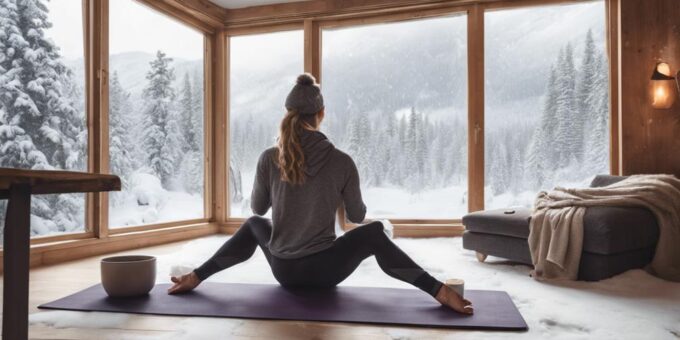
During the cold winter months, staying active and healthy can be challenging, but indoor exercises provide a convenient and effective solution. Bodyweight exercises, yoga, and high-intensity interval training are great options that can be done in the comfort of your own home. Resistance bands, dance workouts, and stair climbing are also excellent alternatives to outdoor exercise. By incorporating these exercises into your routine, you can boost your cardiovascular fitness, strengthen your muscles, and improve your overall well-being. Explore these indoor exercises and discover a variety of workouts tailored to your fitness level and goals, and discover a path to a healthier, more active you. Creating a sustainable workout routine ensures that you stay motivated and consistent throughout the winter months. By setting realistic goals and varying your exercises, you can maintain engagement and prevent burnout. With dedication and the right approach, indoor workouts can keep you feeling energized and healthy all season long.
Bodyweight Exercises for Beginners
Regularly incorporating bodyweight exercises into your routine can be an excellent way to maintain physical fitness, especially during cold weather when outdoor activities may be limited. As a beginner, it's essential to start with exercises that work multiple muscle groups at once, maximizing your workout efficiency. Squats, push-ups, and lunges are excellent exercises to begin with, as they engage multiple joints and muscle groups simultaneously. These exercises also improve overall functional strength, making daily activities easier.
When starting out, it's vital to focus on proper form and technique to avoid injuries. Start with lower reps and sets, gradually increasing the difficulty as you build strength and endurance. Additionally, incorporate exercises that target your core, such as planks and bicycle crunches, to improve overall stability and balance. As you progress, you can introduce more advanced exercises like burpees, mountain climbers, and tricep dips. Remember to listen to your body and rest when needed, as consistent progressive overload is key to achieving long-term fitness goals. By incorporating bodyweight exercises into your routine, you can stay active, healthy, and motivated during the cold winter months.
Yoga Flow for Cold Winter Days
As the cold winter days set in, a gentle and restorative yoga flow can be a perfect way to stay active and relaxed indoors. A well-structured yoga practice begins with essential warm-up stretches to increase flexibility and reduce the risk of injury. By incorporating mindful breathing exercises and relaxing postures, individuals can experience a profound sense of calm and tranquility, ideal for combating the stresses of cold winter days.
Warm-Up Stretching Essentials
During the cold winter months, incorporating warm-up stretching exercises into your daily routine can help increase blood flow and flexibility, making it easier to tackle outdoor activities or indoor workouts. This is especially important for individuals who engage in physical activities or exercise during the winter season. A well-structured warm-up routine can help prevent injuries, improve performance, and enhance overall physical fitness.
When it comes to warm-up stretching, there are several essential exercises to focus on:
- Neck Stretch: Slowly tilt your head to the side, bringing your ear towards your shoulder, and hold for 30 seconds before switching sides.
- Shoulder Rolls: Roll your shoulders forward and backward in a circular motion, repeating for 10-15 repetitions.
- Chest Stretch: Stand in a doorway with your hands on the doorframe at shoulder height, leaning forward until you feel a stretch in your chest and shoulders.
- Quad Stretch: Stand with one hand against a wall for balance, bending one knee, and grabbing your ankle with your hand, holding for 30 seconds before switching legs.
- Calf Stretch: Stand facing a wall with one hand on the wall for balance, stepping one foot back about a foot, and bending the front knee, holding for 30 seconds before switching legs.
Breathing Exercises Matter
As the chill of winter settles in, incorporating breathing exercises into your yoga flow can become a warm and comforting refuge, helping to regulate your body's internal thermostat and calm your mind. This is especially important during the cold winter months when our respiratory systems may be more prone to congestion and discomfort. By focusing on conscious breathing, you can enhance your overall yoga practice and reap numerous physical and mental benefits.
| Breathing Exercise | Benefits | Tips |
|---|---|---|
| Alternate Nostril Breathing | Balances breath, calms nervous system | Use right hand to close nostrils |
| Bhastrika Breathing | Energizes, warms body | Inhale deeply, exhale forcefully |
| Kapalabhati Breathing | Purifies lungs, improves circulation | Focus on quick exhalations |
| Box Breathing | Reduces stress, improves focus | Inhale, hold, exhale, hold |
| Diaphragmatic Breathing | Strengthens lungs, promotes relaxation | Engage belly, not chest
Relaxation Postures Help
While conscious breathing exercises can have a profound impact on our overall well-being, incorporating relaxation postures into our yoga flow can further enhance our ability to relax and unwind on cold winter days. By incorporating relaxation postures into our daily routine, we can reduce stress and anxiety, improve our mood, and even alleviate symptoms of depression. This is especially important during the winter months when the lack of sunlight and cold weather can exacerbate feelings of melancholy.
- Child's Pose: A gentle stretch that promotes relaxation and reduces stress.
- Downward-Facing Dog: Stretches the entire back side of the body, from shoulders to heels, and can help calm the mind.
- Seated Forward Fold: Lengthens the entire front side of the body, from shoulders to toes, and can help reduce anxiety.
- Legs Up The Wall Pose: Inverts the body, allowing gravity to calm the nervous system and promote relaxation.
- Savasana: The ultimate relaxation pose, where the body and mind are completely at rest.
High-Intensity Interval Training Inside
Regularly incorporating high-intensity interval training into your indoor workout routine can greatly enhance your cardiovascular fitness and burn calories efficiently, even when confined to a small space. This type of training involves short bursts of high-intensity exercise followed by brief periods of rest. A typical session may include exercises such as burpees, jump squats, and mountain climbers, performed at maximum intensity for 20-30 seconds, followed by 1-2 minutes of rest. This cycle is repeated for 15-20 minutes, resulting in a calorie-torching, heart-pumping workout.
High-intensity interval training is an excellent option for indoor exercise during cold weather, as it can be done in a small space with minimal equipment. Additionally, it can be modified to suit different fitness levels, making it an accessible option for individuals of all ages and abilities. By incorporating high-intensity interval training into your indoor workout routine, you can improve your overall health and fitness, even on the coldest of days.
Dance Your Way to Fitness
In addition to high-intensity interval training, another fun and effective way to stay active indoors during cold weather is to dance your way to fitness. Dancing can be a great way to get your heart rate up, improve flexibility, and boost your mood. It's also a low-impact activity, making it easy on the joints.
Some popular dance styles to try include:
- Zumba, which combines Latin and international music with dance moves
- Hip hop, which incorporates high-energy movements and rhythmic beats
- Ballet fitness, which focuses on strength, flexibility, and posture
- Line dancing, which provides a fun and social way to get some exercise
- Jazzercise, which combines elements of jazz dance, aerobics, and strength training
Dancing can be done in the comfort of your own home, making it a convenient and accessible way to stay active during the cold winter months. Simply put on some upbeat music and get moving!
Resistance Band Workout Essentials
When it comes to resistance band workouts, having the right equipment and proper technique are vital for an effective and safe exercise routine. With a multitude of resistance bands available, selecting the appropriate band for your fitness level and goals is essential. In this section, we will focus on band selection tips and proper grip techniques to help you get the most out of your workout.
Band Selection Tips
Choosing the appropriate resistance band is crucial for achieving an effective workout, as different bands are tailored to diverse fitness levels and exercise objectives. Selecting the right band guarantees a challenging yet manageable workout, allowing you to achieve your fitness goals efficiently.
When selecting a resistance band, consider the following factors:
- Band material: Latex, nylon, or rubber bands have varying levels of resistance and durability.
- Band thickness: Thicker bands offer more resistance, while thinner bands provide less.
- Band color: Many manufacturers use a color-coded system to indicate resistance levels, with lighter colors indicating lighter resistance and darker colors indicating heavier resistance.
- Band length: Longer bands provide more range of motion, while shorter bands offer more intense resistance.
- Band features: Some bands have additional features, such as handles or anchors, which can enhance your workout experience.
Proper Grip Techniques
A vital grip is essential to harness the full potential of resistance band exercises, as it enables efficient transfer of force and helps prevent injuries. When holding the band, make sure your hands are positioned correctly to maintain control and generate maximum tension. A neutral grip, where your palms face each other, is ideal for most exercises. This grip allows for smooth movement and reduces the risk of twisting or straining your wrists.
For exercises that require a more dynamic movement, such as banded rotations or chest presses, a pronated grip (palms facing downwards) may be necessary. Conversely, a supinated grip (palms facing upwards) is suitable for exercises like banded rows or shoulder presses. It's important to adjust your grip according to the specific exercise and your individual comfort level. Remember to keep your wrists straight and your forearms relaxed, as excessive tension can lead to fatigue and discomfort. By mastering proper grip techniques, you'll be able to execute resistance band exercises with confidence and precision, ultimately achieving a more effective and safe workout.
Jump Rope Cardio Blast
The jump rope, a classic cardio tool, provides an intense and efficient workout that can be done in the comfort of your own home, making it an ideal exercise for cold weather days. As a low-impact exercise, jump roping is easy on the joints, yet still provides an excellent cardiovascular workout. This exercise targets the legs, arms, and core, improving overall fitness and burning calories.
To get the most out of your jump rope workout, remember:
- Start with 30-second intervals and rest for 30 seconds in between
- Aim for 100-150 jumps per minute to maximize calorie burn
- Mix up your rhythm by trying different footwork patterns, such as single unders, double unders, and side-to-side jumps
- Incorporate strength training exercises, like burpees or mountain climbers, to add variety to your workout
- Track your progress by counting jumps, time, or calories burned to stay motivated
Stair Climbing for Indoor Fitness
While the jump rope provides an excellent cardio workout, stair climbing offers a similarly effective way to boost cardiovascular fitness and strengthen the legs, all from the comfort of your own home. This exercise requires minimal equipment, making it an accessible and convenient option for those looking to stay active during the cold winter months. To incorporate stair climbing into your fitness routine, find a sturdy staircase in your home or apartment building, and climb at a moderate to high intensity for 10-15 minutes, resting for 1-2 minutes between climbs. Be sure to maintain proper form, keeping your posture upright and engaging your core muscles to support your body. As you climb, focus on quick, light steps, and avoid overexertion. With regular practice, stair climbing can help improve cardiovascular endurance, increase leg strength, and boost overall fitness.
Balance and Core Strengthening Moves
As the cold weather sets in, it's essential to maintain functional strength and stability through balance and core exercises. Single-leg standing exercises, for instance, improve balance and reduce the risk of falls, while core engagement exercises strengthen the muscles that support our posture and movement. By incorporating these exercises into your indoor fitness routine, you'll enhance your overall physical fitness and reduce the risk of injury.
Single-Leg Standing
By standing on one leg, you can engage your core muscles and improve your balance, reducing your risk of injury and enhancing overall athletic performance. This simple exercise can be done anywhere, anytime, making it an ideal indoor activity for cold weather.
To perform single-leg standing, start by standing on a flat surface with your feet hip-width apart. Lift one foot off the ground, keeping your knee straight, and hold for 10-30 seconds. Switch legs and repeat. It's essential to focus on your posture, keeping your shoulders back, chest up, and weight evenly distributed on the standing leg.
Some tips to keep in mind:
- Start with shorter holds and gradually increase the time as you build balance and strength.
- Look ahead, not down, to maintain balance and prevent dizziness.
- Engage your core muscles by drawing your belly button towards your spine.
- Practice with your eyes closed to challenge your balance further.
- Use a wall or chair for support if needed, especially for beginners.
Core Engagement Exercises
Building on the foundation of single-leg standing, incorporating core engagement exercises can further enhance balance and stability by strengthening the muscles that support the spine and pelvis. These exercises target the transverse abdominis muscle, which is responsible for stabilizing the core and maintaining good posture.
Effective core engagement exercises include planks, bird dogs, and side planks. Planks involve holding a position where the body is supported by the hands and toes, engaging the core muscles to maintain a straight line from head to heels. Bird dogs require getting on all fours and lifting the arms and legs off the ground, holding for a few seconds before lowering back down. Side planks target the obliques, which are essential for rotational movements and stability.
Incorporating these exercises into your indoor workout routine can improve overall balance, reduce the risk of injury, and enhance athletic performance. By strengthening the core, you can maintain good posture, reduce back pain, and improve overall functional movement. Regular practice of core engagement exercises will help you develop a strong foundation for more complex movements and daily activities.
Quick and Effective Pilates Routine
Six days a week, a quick and effective Pilates routine can be achieved in just 20 minutes, focusing on core strength, flexibility, and body control. This efficient routine can be incorporated into a busy schedule, providing a holistic workout that benefits both body and mind.
To get started, find a quiet and comfortable space with a non-slip surface. Lie on your back with your arms extended overhead and engage your core muscles. Then, move through the following exercises:
- The Hundred: Hold for 100 beats, engaging your core and maintaining a steady flow of breath.
- Teaser: Lift your shoulders and legs off the mat, maintaining control and precision.
- Roll-Up: Curl up, lifting your shoulders and chest, and then slowly roll back down.
- Leg Raises: Lift your legs straight up towards the ceiling, engaging your core and maintaining control.
- Plank: Hold a steady plank position, engaging your core and maintaining a straight line from head to heels.
Remember to breathe naturally and smoothly, avoiding any jerky movements. By incorporating this quick and effective Pilates routine into your daily schedule, you can improve your overall fitness and well-being.
Meditation for Mind-Body Connection
Every individual seeking a deeper mind-body connection can benefit from incorporating meditation into their daily routine, as it offers a powerful tool for cultivating self-awareness, reducing stress, and enhancing overall well-being. By dedicating just a few minutes each day to meditation, individuals can experience a profound impact on their mental and physical health. Regular meditation practice has been shown to decrease symptoms of anxiety and depression, improve sleep quality, and boost the immune system. In addition, meditation can increase focus, concentration, and creativity, leading to greater productivity and overall life satisfaction. To get started, find a quiet and comfortable space, sit comfortably with eyes closed, and focus on the breath. When the mind wanders, gently bring attention back to the breath without judgment. Start with short sessions, such as five to ten minutes, and gradually increase as desired. By making meditation a priority, individuals can tap into the full potential of their mind-body connection, leading to a more balanced, harmonious, and fulfilling life.
Frequently Asked Questions
Can I Do Indoor Exercises if I Have Limited Mobility or Injuries?
Individuals with limited mobility or injuries can still engage in indoor exercises, albeit with modifications. It's essential to consult with a healthcare professional to determine suitable exercises based on individual abilities and limitations. Gentle, low-impact exercises like chair yoga, resistance band exercises, or bodyweight exercises can be adapted to accommodate mobility issues. Additionally, exercises can be performed while seated or lying down, ensuring accessibility for those with mobility limitations.
How Often Should I Exercise Indoors to See Noticeable Results?
"Consistency is key" when it comes to achieving noticeable results from exercise. To reap benefits, aim to exercise indoors at least 3-4 times a week, with a minimum of 30 minutes per session. As you progress, increase frequency or duration to continue challenging yourself. Be patient, as noticeable results typically emerge after 4-6 weeks of consistent effort.
Do I Need to Invest in Special Equipment for Indoor Exercises?
When engaging in physical activity, one may wonder if special equipment is necessary for best results. The answer lies in the type of exercise and personal goals. While some exercises, like yoga or bodyweight routines, require minimal to no equipment, others, such as strength training or cardio exercises, may benefit from investing in equipment like dumbbells, resistance bands, or a treadmill. Assess your fitness goals and choose equipment that aligns with your objectives.
Can Indoor Exercises Help With Stress Relief and Anxiety?
Regular exercise is a well-established stress-relief strategy, and indoor exercises are no exception. Physical activity stimulates the production of endorphins, also known as "feel-good" hormones, which help alleviate anxiety and stress. By incorporating indoor exercises into one's routine, individuals can experience reduced stress levels, improved mood, and enhanced overall well-being. This, in turn, can lead to better sleep quality, increased energy, and a greater sense of calm and control.
Are Indoor Exercises Suitable for All Ages and Fitness Levels?
Exercise programs can be tailored to accommodate diverse age groups and fitness levels, ensuring inclusivity and accessibility. Gentle stretching, low-impact aerobics, and strength training modify to suit seniors, while high-intensity interval training and advanced strength exercises challenge more athletic individuals. Modifications and progressions allow exercises to adapt to unique needs, making indoor exercises a viable option for people of all ages and abilities, promoting a culture of inclusivity and wellness.
