
We're on the cusp of a technological revolution, with nanotechnology poised to transform industries and daily life in profound ways. By harnessing the unique properties of nanoscale materials, we can create sustainable energy solutions, develop targeted cancer treatments, and detect diseases at the molecular level. From supercharging energy storage to cleaning our environment, the potential impact is enormous. As we explore the vast possibilities of nanotechnology, we're discovering new ways to improve human health, protect the planet, and push the boundaries of innovation. And the most exciting part? This is just the beginning of our nanotech journey.
Harnessing Nanoscale Materials
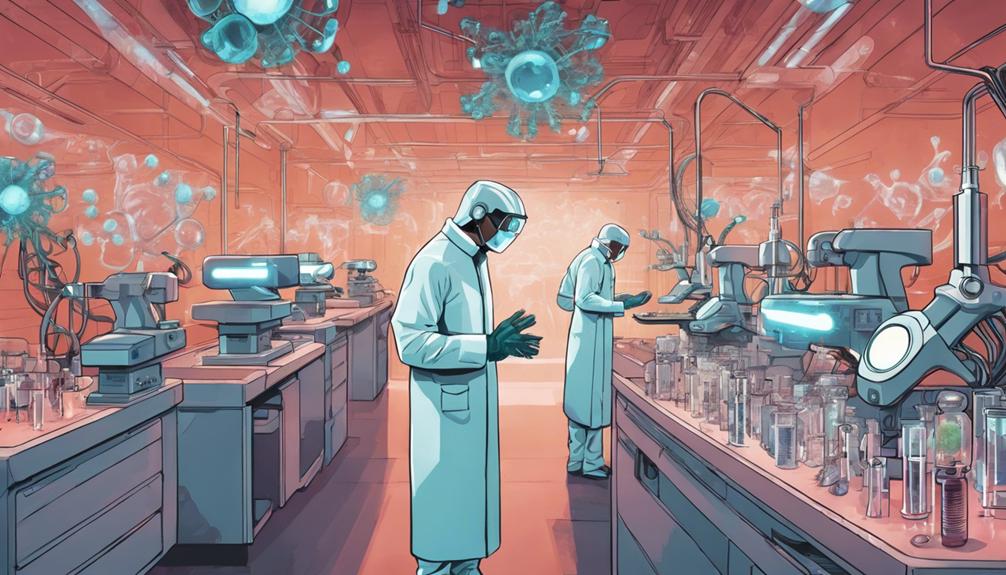
By harnessing the unique properties of nanoscale materials, we can discover innovative solutions to some of humanity's most pressing challenges. We're not just talking about incremental improvements – we're talking about game-changers. By leveraging the extraordinary strength, conductivity, and reactivity of nanomaterials, we can create sustainable energy solutions, purify water, and even clean up environmental pollutants.
We're already seeing the impact of nanotechnology in our daily lives. For instance, we're using nanocoatings to create self-cleaning surfaces, reducing the need for harsh chemicals and promoting a healthier environment. We're developing nanocatalysts that can convert biomass into biofuels, reducing our reliance on fossil fuels and mitigating climate change. And we're designing nanofiltration systems that can remove impurities from water, providing clean drinking water for millions of people worldwide.
The possibilities are endless, and we're just scratching the surface. By continuing to push the boundaries of nanotechnology, we can access new opportunities for economic growth, improve our quality of life, and create a more sustainable future for generations to come. We're not just talking about the potential – we're making it a reality. And as we continue to harness the power of nanoscale materials, we're confident that the best is yet to come.
Cancer Treatment Breakthroughs
We're witnessing a revolution in cancer treatment, as nanotechnology enables targeted drug delivery and enhances the efficacy of traditional therapies. By engineering nanoparticles to specifically target cancer cells, we're able to minimize harm to healthy cells and reduce the severity of side effects. This targeted approach also allows for higher doses of chemotherapy to be delivered directly to the tumor site, increasing the treatment's effectiveness.
Nanoparticles can also be designed to release drugs in a controlled, sustained manner, providing a prolonged therapeutic effect. This can lead to improved treatment outcomes and reduced treatment frequencies. Furthermore, nanotechnology is enabling the development of novel imaging agents that can help us visualize cancer cells with greater precision, allowing for earlier detection and more accurate diagnosis.
We're also exploring the potential of nanoparticles to stimulate the immune system to attack cancer cells, a promising approach known as immunotherapy. By leveraging the body's natural defenses, we can create a more sustainable and durable response to cancer. As we continue to advance our understanding of nanotechnology and its applications in cancer treatment, we're poised to make a significant impact on the lives of millions of people worldwide.
Energy Storage Revolution
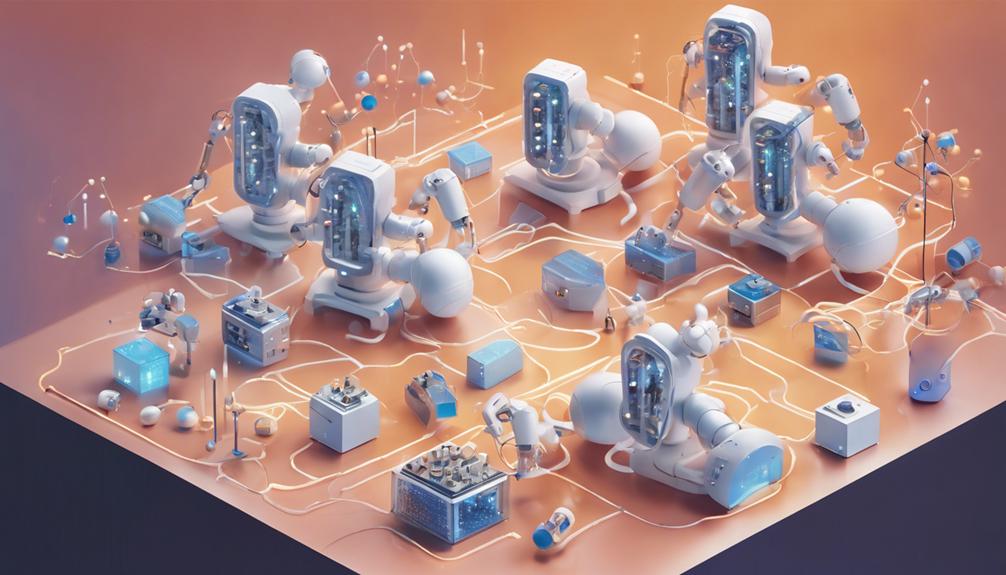
As we explore the Energy Storage Revolution, we're excited to see how nanotechnology is transforming the way we store energy. By increasing power density, we can pack more energy into smaller spaces, making devices more efficient and convenient. Next, we'll examine how nanostructured electrodes and efficient charging cycles are further enhancing energy storage capabilities.
Power Density Increase
Advances in nanotechnology have enabled a significant power density increase, effectively igniting an energy storage revolution. We're no longer limited by bulky batteries that can't keep up with our increasingly power-hungry devices. With nanotechnology, we can pack more energy into smaller spaces, making our devices more efficient and convenient.
This boost in power density means we can enjoy longer battery life, faster charging times, and even explore new possibilities like electric vehicles and renewable energy systems. The impact is huge, and we’re just starting to realize the potential. Imagine being able to store energy generated by solar panels or wind turbines, and using it when we need it most. Nanotechnology is making that a reality. These advancements are shaping the future of energy storage, making it more efficient and sustainable. As tech trends in renewable energy continue to evolve, we can expect even more breakthroughs that enhance grid stability and reduce our reliance on fossil fuels. With nanotechnology driving innovation, the way we generate, store, and use energy is being transformed before our eyes.
We're not just talking about incremental improvements, either. The power density increase we're seeing is exponential, with some batteries showing up to a 10-fold increase in energy storage capacity. That's a game-changer, and we're excited to see where this technology takes us. With nanotechnology leading the charge, the future of energy storage is brighter than ever.
Nanostructured Electrodes
By engineering nanostructured electrodes, we can turbocharge energy storage by increasing the surface area, allowing for faster charging and more efficient energy transfer. This breakthrough enables us to pack more power into smaller batteries, making them more efficient and reliable. The enhanced surface area also reduces the internal resistance, leading to less heat generation and increased overall performance.
Here are just a few benefits of nanostructured electrodes:
- Faster charging times: With increased surface area, electrons can move more quickly, reducing charging times and getting us back on the go faster.
- Improved energy density: By packing more power into smaller spaces, we can create more efficient energy storage solutions.
- Enhanced reliability: With reduced internal resistance, our batteries last longer and perform more consistently.
- Increased safety: Lower heat generation reduces the risk of overheating and battery failure, making our devices safer to use.
Efficient Charging Cycles
We're on the cusp of a revolution in energy storage, where efficient charging cycles will unleash the full potential of our devices, freeing us from the shackles of battery anxiety. No longer will we be tied to a wall outlet, constantly worried about running out of juice. With advanced nanotechnology, we're developing batteries that charge faster, last longer, and pack more power.
The key to this revolution lies in the optimization of charging cycles. By fine-tuning the charging process, we can increase the overall efficiency of our devices. Here's a breakdown of the benefits:
| Charging Cycle | Benefits |
|---|---|
| Fast Charging | Reduced charging time, increased convenience |
| Slow Charging | Increased battery lifespan, reduced wear |
| Adaptive Charging | Optimized charging for specific devices |
| Smart Charging | Intelligent charging for maximum efficiency |
With efficient charging cycles, we'll unleash the full potential of our devices, empowering us to take on the day without worrying about battery life. The future of energy storage is here, and it's more powerful than ever.
Medical Diagnosis Advancements
As researchers and medical professionals, we've been working to harness the potential of nanotechnology to revolutionize medical diagnosis, and the results are nothing short of remarkable. By leveraging the unique properties of nanoparticles, we've been able to develop innovative diagnostic tools that are faster, more accurate, and less invasive.
One of the most significant advancements has been in the area of biomarker detection. Nanoparticles have enabled us to detect biomarkers at the molecular level, allowing for earlier disease detection and more targeted treatments. Additionally, nanotechnology has enabled the development of point-of-care diagnostic devices that can provide rapid and accurate test results, reducing the need for lengthy lab tests.
Some of the most promising applications of nanotechnology in medical diagnosis include:
- Enhanced imaging agents: Nanoparticles can be designed to target specific cells or tissues, allowing for more precise and detailed imaging.
- Portable diagnostic devices: Nanotechnology has enabled the development of handheld diagnostic devices that can detect diseases in real-time.
- Targeted therapy: Nanoparticles can be used to deliver targeted therapies directly to affected cells or tissues, reducing side effects and improving treatment outcomes.
- Early disease detection: Nanoparticles can detect biomarkers for diseases at the molecular level, allowing for earlier detection and treatment.
These advancements have the potential to transform the field of medical diagnosis, enabling faster, more accurate, and more targeted treatments. As researchers and medical professionals, we're excited to continue exploring the vast potential of nanotechnology to improve human health.
Environmental Remediation Tools
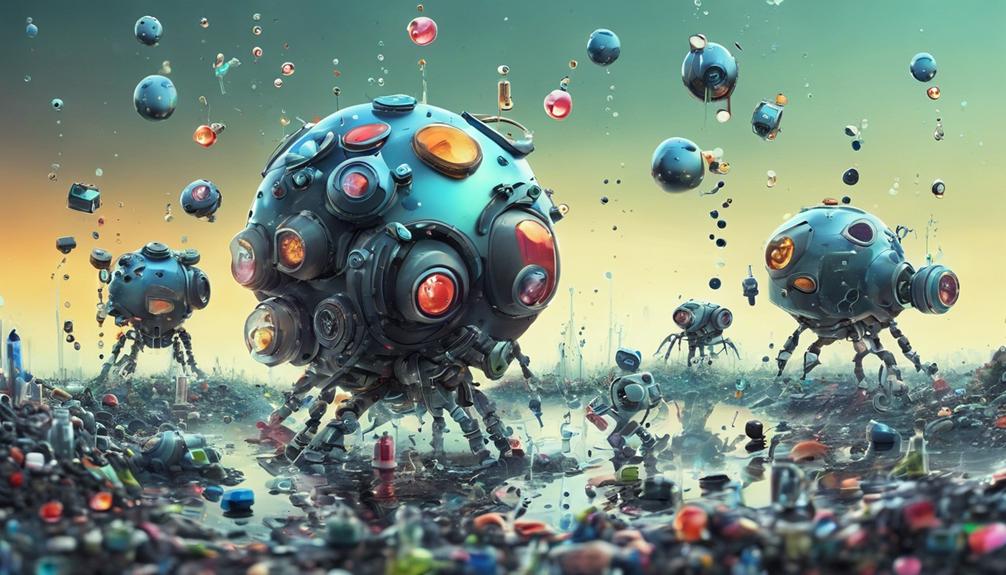
One of the most pressing environmental challenges we face today is the contamination of our soil, air, and water, and nanotechnology is providing innovative solutions to tackle these problems. We're developing nanomaterials that can detect and remove pollutants, making our environment safer and healthier. For instance, nanoparticles can be designed to absorb heavy metals, pesticides, and other toxic substances from contaminated soil and water. These tiny particles can also be engineered to break down pollutants into harmless compounds, eliminating the need for costly and time-consuming cleanup processes.
We're also creating nanosensors that can detect pollutants at incredibly low concentrations, allowing us to identify and address environmental issues before they become major problems. These sensors can be integrated into wearable devices, enabling real-time monitoring of air and water quality. Additionally, we're exploring the use of nanocatalysts to degrade pollutants in a more efficient and cost-effective manner. By leveraging the unique properties of nanomaterials, we're discovering new possibilities for environmental remediation. As we continue to push the boundaries of nanotechnology, we're confident that we can develop even more effective solutions to the environmental challenges we face.
Manufacturing on a Small Scale
As we delve into the domain of manufacturing on a small scale, we're discovering that it's not just about shrinking things down – it's about mastering techniques that allow us to craft materials with unprecedented precision. We're finding that nano-fabrication techniques are key to creating materials with unique properties. By understanding how material properties change at the nanoscale, we can reveal new possibilities for innovation.
Nano-Fabrication Techniques
We employ various nano-fabrication techniques to craft materials and devices on an incredibly small scale, often measuring in the range of nanometers. This allows us to create structures and patterns that are not possible with traditional manufacturing methods.
To achieve this level of precision, we utilize a range of techniques, including:
- Lithography: a process that uses light to etch patterns onto a surface, allowing us to create intricate designs and structures.
- Molecular beam epitaxy: a technique that deposits atoms or molecules onto a surface, enabling us to build materials layer by layer.
- Nano-imprint lithography: a method that uses a mold to pattern materials, enabling rapid and cost-effective production of nanostructures.
- Scanning probe microscopy: a technique that uses a physical probe to manipulate and pattern materials at the nanoscale.
Material Properties Matter
When we manufacture on a small scale, the properties of materials take on a whole new level of importance, as even slight variations can greatly impact the final product's performance. At the nanoscale, materials' properties can differ markedly from their bulk counterparts. We've learned to harness these unique properties to create innovative materials with enhanced strength, conductivity, or optical properties. For instance, nanoparticles can exhibit increased reactivity, making them ideal for catalytic applications. Similarly, nanomaterials can display enhanced optical properties, such as fluorescence, making them suitable for biomedical imaging.
As we design and engineer materials at the nanoscale, we must carefully consider these altered properties. We need to understand how they'll behave under various conditions, ensuring our creations meet their intended goals. By grasping the intricacies of material properties at the nanoscale, we're empowered to craft materials that push the boundaries of what's possible. With this understanding, we can open up new possibilities in fields like energy, medicine, and technology, driving innovation and progress.
The Future of Nanotechnology

Our ability to manipulate matter at the nanoscale is positioned to spark a new wave of innovations that will transform industries and revolutionize the way we live. As we continue to push the boundaries of what's possible, we're poised to access unprecedented breakthroughs that will reshape the world around us. The future of nanotechnology is bright, and we're excited to be at the forefront of this revolution.
We're on the cusp of a new era, where nanotechnology will play an essential role in solving some of humanity's most pressing challenges. From clean energy and sustainable infrastructure to advanced healthcare and smart materials, the potential applications are vast and varied.
Here are just a few areas where we're expecting to see significant advancements:
- Clean Energy: Nanotechnology will enable the development of more efficient solar cells, fuel cells, and energy storage systems, paving the way for a cleaner, more sustainable future.
- Advanced Healthcare: Targeted drug delivery, regenerative medicine, and personalized diagnostics will become a reality, transforming the way we approach healthcare.
- Smart Materials: Self-healing materials, adaptive structures, and metamaterials will redefine the boundaries of what's possible in construction, aerospace, and more.
- Quantum Computing: Nanotechnology will play a key role in the development of ultra-powerful, ultra-efficient computing systems that will solve complex problems and open up new discoveries.
The future is bright, and we're thrilled to be a part of it.
Frequently Asked Questions
Can Nanotechnology Be Used for Food Production and Processing?
We're exploring the potential of nanotechnology in food production and processing, and the possibilities are vast. We can enhance crop yields, create targeted fertilizers, and even develop nanoscale sensors to monitor food safety. We're also looking into nano-encapsulation to preserve nutrients and extend shelf life. The future of food production is ripe for a nanotech revolution, and we're leading the charge.
How Does Nanotechnology Impact the Environment and Ecosystem?
As we stand at the edge of a nanotech revolution, a stormy sea of uncertainty swirls around us, threatening to engulf the environment and ecosystem. We're acutely aware that nanotechnology's impact on the planet is like a double-edged sword – it can cut both ways. On one hand, it can help clean pollutants, but on the other, it can also release toxic nanoparticles into the air and water. We must navigate this uncharted territory with care.
Are Nanomaterials Toxic to Humans and Other Living Organisms?
We're digging deep into the toxicity of nanomaterials, and what we're finding isn't reassuring. Research suggests that these tiny particles can penetrate our cells and cause oxidative stress, inflammation, and even DNA damage. It's clear that nanomaterials can be toxic to humans and other living organisms, and we need to take a closer look at the long-term effects before we let them permeate our daily lives.
Can Nanotechnology Be Used to Create Artificial Organs or Body Parts?
Like master architects, we envision a future where nanotechnology crafts artificial organs, bridging the gap between life and death. Can we create synthetic body parts that mimic nature's perfection? We're on the cusp of revolutionizing healthcare. By harnessing nanotech's precision, we can engineer organs that not only function but also interact seamlessly with the human body. The possibilities are endless, and we're driving the innovation.
Will Nanotechnology Replace Traditional Manufacturing Methods Entirely?
We're not convinced that nanotechnology will replace traditional manufacturing methods entirely. While it's a game-changer, there are still limitations to its scalability and cost-effectiveness. We think it'll augment traditional methods, not replace them. Nanotech will excel in niche areas, like precision crafting and medical devices, but for mass production, traditional methods will still reign supreme. We're excited about the possibilities, but we're not ready to write off traditional manufacturing just yet.
