
We're on the cusp of an e-commerce revolution, where interactive shopping experiences, augmented reality, AI-powered personalization, and autonomous delivery will converge to redefine the online shopping landscape. Interactive 3D models, AI-driven chatbots, and real-time price negotiation are just the beginning. Social commerce platforms will seamlessly merge browsing and buying, while AI will enhance online shopping experiences and lead to higher conversion rates. Autonomous delivery innovations, like drone logistics and airborne package security, will increase efficiency and customer satisfaction. As we look to the future, we can't help but wonder what's next – and we're about to find out.
Revolutionizing the Shopping Experience

As we step into the future of online shopping, we're witnessing a seismic shift in the way we discover, interact with, and purchase products, thanks to cutting-edge innovations that are revolutionizing the shopping experience. We're no longer limited to static product pages and bland descriptions. Instead, we're immersed in interactive 3D models, augmented reality (AR) experiences, and personalized virtual try-ons that simulate the in-store experience. We're able to 'touch' and 'feel' products remotely, eliminating the need for physical stores.
These innovations aren't just limited to visual enhancements. We're also seeing AI-powered chatbots that offer personalized product recommendations, streamlining the shopping process and reducing friction. We're able to ask questions, receive instant responses, and even negotiate prices in real-time. Additionally, AI-driven analytics are helping retailers optimize their supply chains, ensuring that products are delivered faster and more efficiently.
As we navigate this new landscape, we’re not just consumers – we’re co-creators. We’re influencing product development, driving innovation, and shaping the future of online shopping. With every click, tap, and swipe, we’re redefining what it means to shop online. And as we continue to push the boundaries of what’s possible, one thing is clear: the future of online shopping is bright, bold, and tailor-made for us. Retailers are leveraging data-driven insights and personalized experiences to meet our evolving expectations, ensuring that online shopping is more intuitive and engaging than ever. By adopting innovative ecommerce strategies for tech gadgets, companies can offer seamless experiences that cater to our unique preferences and needs. As technology advances, our role in shaping these shopping experiences will only grow, making the digital marketplace more dynamic and customer-focused.
Rise of Social Commerce Platforms
We're increasingly shifting to social media platforms to discover and buy products, blurring the lines between socializing and shopping. This change has given rise to social commerce platforms, where we can seamlessly move from browsing to buying, often without leaving the app. It's no wonder why social commerce has become a significant force in the e-commerce landscape.
The benefits are undeniable. Social commerce platforms offer a more immersive and interactive experience, allowing us to engage with brands and products in a more personal way. We can browse, share, and purchase products directly from our social feeds, eliminating the need to navigate to external websites. Additionally, social commerce platforms provide businesses with valuable insights into consumer behavior, enabling them to tailor their marketing strategies and improve customer engagement.
As social commerce continues to evolve, we can expect to see even more innovative features and integrations. For instance, augmented reality (AR) and virtual reality (VR) technologies are being explored to enhance the shopping experience, allowing us to virtually 'try on' products before making a purchase. With social commerce, the boundaries between online and offline shopping are disappearing, and we're excited to see where this trend takes us.
Autonomous Delivery Takes Flight
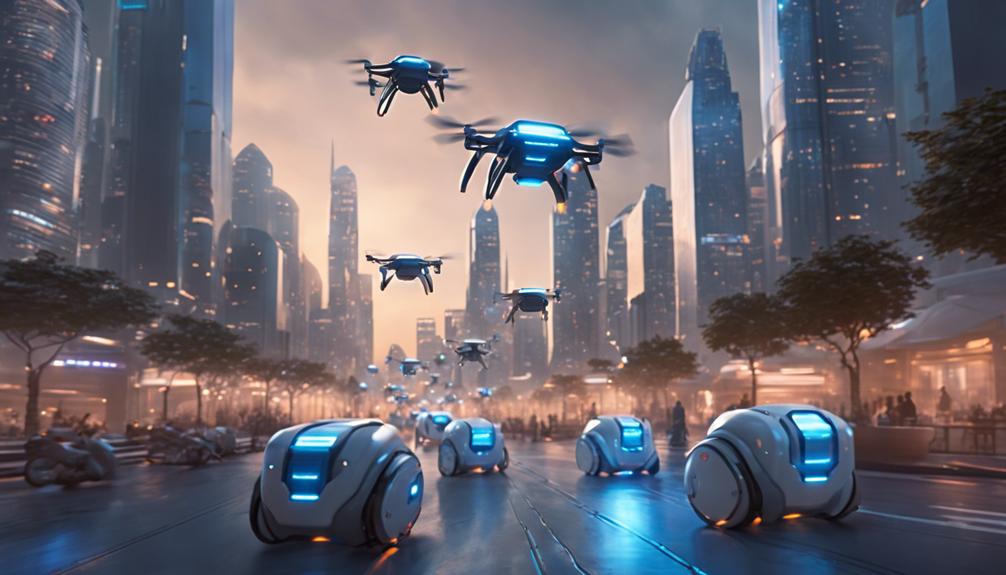
As we explore the future of e-commerce, we're excited to see autonomous delivery take to the skies. We're now turning our attention to the key aspects that will make this innovation a reality, including the logistics of drone delivery, ensuring the security of packages in transit, and optimizing flight routes for efficiency. By examining these critical points, we'll uncover the potential of autonomous delivery to revolutionize online shopping.
Drone Delivery Logistics
With online shoppers increasingly expecting same-day delivery, companies are turning to drone delivery logistics to reduce last-mile costs and carbon emissions. We're witnessing a significant shift in the way goods are transported, and it's about time we took to the skies. By leveraging drone technology, businesses can cut delivery times, reduce traffic congestion, and minimize their environmental footprint.
Here's a breakdown of how drone delivery logistics can benefit e-commerce:
| Benefits | Description |
|---|---|
| Increased Efficiency | Drones can travel faster and more directly than traditional vehicles, reducing delivery times by up to 90%. |
| Cost Savings | Drone delivery can reduce last-mile costs by up to 70%, making it a more cost-effective option for businesses. |
| Environmental Benefits | Drones produce zero emissions, making them a more sustainable option for delivery. |
| Improved Customer Experience | Faster delivery times and real-time tracking updates enhance the overall customer experience. |
| Increased Accessibility | Drones can reach remote or hard-to-access areas, expanding businesses' reach and customer base. |
As we continue to innovate and refine drone delivery logistics, we can expect to see even more benefits emerge. It's an exciting time for e-commerce, and we're thrilled to be at the forefront of this revolution.
Airborne Package Security
Security threats take to the skies as autonomous delivery drones become more prevalent, making airborne package security a paramount concern for e-commerce companies. As we increasingly rely on autonomous drones to deliver our goods, we're faced with a new wave of security risks. We're talking hijacked drones, stolen packages, and tampered-with goods – all of which can have devastating consequences for our businesses and customers.
We're working tirelessly to guarantee one step ahead of these threats. We're implementing robust encryption methods to secure communication between drones and control centers. We're also investing in advanced tracking systems that enable real-time monitoring of our drones and packages. And, we're collaborating with cybersecurity experts to develop AI-powered threat detection systems that can identify and respond to potential security breaches.
Our customers expect nothing but the highest level of security, and we're committed to providing it. We're pushing the boundaries of innovation to ensure that our airborne packages are as secure as they are convenient. By prioritizing airborne package security, we're building trust with our customers and paving the way for a safer, more efficient e-commerce experience.
Flight Route Optimization
We're taking the next step in autonomous delivery by optimizing flight routes to minimize fuel consumption, reduce emissions, and get packages to customers even faster. By leveraging advanced algorithms and machine learning, we're able to analyze real-time weather patterns, air traffic, and other factors to plot the most efficient flight paths. This means our drones can fly farther, faster, and more sustainably, reducing our carbon footprint and environmental impact.
Our optimized flight routes also enable us to reduce delivery times, getting packages to customers' doorsteps in record time. With the ability to dynamically adjust routes in real-time, we can respond to changes in weather or air traffic, ensuring that our drones always take the most efficient route. This level of precision and control is unprecedented in the industry, and we're excited to bring this technology to the forefront of e-commerce. By pushing the boundaries of autonomous delivery, we're redefining what's possible in the world of online shopping.
Augmented Reality Shopping Boom
As we step into the augmented reality shopping arena, it's clear that the boundaries between the physical and digital worlds are rapidly dissolving. We're no longer limited to static product images or bland product descriptions. With AR, we can bring products to life, allowing customers to interact with them in a more immersive and engaging way.
Imagine being able to see how a piece of furniture would look in your living room before making a purchase, or virtually trying on clothes to guarantee the perfect fit. The possibilities are endless, and we're just starting to scratch the surface of what's possible.
Here are just a few examples of how AR is revolutionizing the shopping experience:
- Virtual try-on: See how clothes, makeup, or accessories look on you without having to physically try them on.
- Product demos: Interact with products in 3D, allowing you to see how they work and what features they offer.
- In-store navigation: Use AR to navigate physical stores, finding products and receiving personalized recommendations along the way.
- Home decor visualization: See how furniture and decor would look in your home before making a purchase.
As we continue to push the boundaries of AR shopping, we can expect to see even more innovative applications in the future. One thing is certain – the future of shopping has never looked brighter.
AI-Powered Personalized Retail

Our online shopping experiences are about to get a whole lot more personal, thanks to the increasing presence of artificial intelligence in retail. We're no longer just browsing through generic product recommendations; AI is now helping us uncover tailored suggestions that speak directly to our unique tastes and preferences. This shift towards personalized retail is revolutionizing the way we shop online, and we're loving every minute of it.
With AI-powered chatbots, we're getting instant support and guidance throughout our shopping journey. These intelligent assistants are learning our habits, understanding our needs, and providing us with relevant content that resonates with our interests. It's like having our own personal shopping concierge, minus the hefty price tag.
What's more, AI-driven product recommendations are getting increasingly sophisticated. We're seeing curated collections based on our browsing history, purchase behavior, and even social media activity. It's no longer about browsing through endless product lists; AI is doing the heavy lifting for us, serving up relevant options that we're more likely to love.
The best part? This personalized approach is paying off. We're seeing higher conversion rates, increased customer satisfaction, and a significant reduction in cart abandonment. It's a win-win for both shoppers and retailers alike. As AI continues to advance, we can't wait to see what's in store for the future of online shopping. One thing's for sure – it's going to be a whole lot more personal.
Seamless Checkout Experiences
With personalized retail experiences now the norm, the next hurdle to conquer is the often-frustrating checkout process, where a seamless and efficient experience is key to turning browsers into buyers. We're all too familiar with the frustration of filling out lengthy forms, dealing with payment errors, and struggling to redeem promo codes. It's time to rethink the checkout process, and we're excited to explore the innovations that will take online shopping to the next level.
So, what does a seamless checkout experience entail? For us, it means:
- One-click checkout: No more tedious form-filling or password retrieval. One-click checkout eliminates friction, making it easy to complete purchases quickly.
- Streamlined payment options: Multiple payment methods, including digital wallets and cryptocurrencies, should be easily accessible to accommodate diverse customer preferences.
- Real-time order tracking: Transparency is key. We want to know exactly where our orders are, from processing to delivery, to eliminate anxiety and uncertainty.
- Intelligent error prevention: Advanced algorithms should detect and prevent errors, ensuring a smooth checkout experience that minimizes frustration and cart abandonment.
Frequently Asked Questions
Will E-Commerce Innovations Lead to Job Losses in the Retail Industry?
As we venture into the uncharted territories of e-commerce, we're forced to confront the elephant in the room: will automation be the executioner of retail jobs? It's a challenging prospect, like a stormy sea threatening to engulf the ship of traditional employment. But we can't ignore the writing on the wall – innovation often comes at a cost. We must adapt, or risk being left in the dust.
How Will Augmented Reality Shopping Impact Traditional Brick-And-Mortar Stores?
We're witnessing a seismic shift in retail as augmented reality shopping takes center stage. It's undeniable – AR is revolutionizing the online experience, allowing customers to virtually try before they buy. But what about traditional brick-and-mortar stores? We think they'll need to adapt or risk becoming obsolete. By integrating AR into their own strategies, these stores can stay competitive and relevant in the evolving retail landscape.
Are Autonomous Delivery Drones Safe for Residential Areas?
Can we really trust autonomous delivery drones to navigate residential areas without a hitch? We're not so certain. As we weigh the benefits of speedy drone delivery against the risks, we can't help but think about the potential for accidents, noise pollution, and privacy concerns. While the idea of drones zipping packages to our doorsteps is exciting, we need to make sure these autonomous flyers are safe, reliable, and respectful of our communities. Anything less is unacceptable.
Can Ai-Powered Personalized Retail Be Biased or Discriminatory?
We're concerned that AI-powered personalized retail can perpetuate biases, mirroring societal prejudices. As we develop these systems, we must recognize the potential for discrimination, whether intentional or not. We need to actively guarantee our algorithms are fair, transparent, and regularly audited to prevent perpetuating harmful stereotypes. It's our responsibility to create inclusive online shopping experiences that don't exacerbate existing social inequalities.
Will Seamless Checkout Experiences Compromise Customer Data Security?
We're exploring the online shopping landscape like sailors mapping unexplored waters. As we weigh the benefits of seamless checkout experiences, we can't overlook the elephant in the room: customer data security. We're torn between convenience and caution. While streamlined checkouts can boost conversions, we risk trading security for speed. It's a delicate balance, and we must make sure that our pursuit of ease doesn't compromise the very foundation of trust with our customers.
