
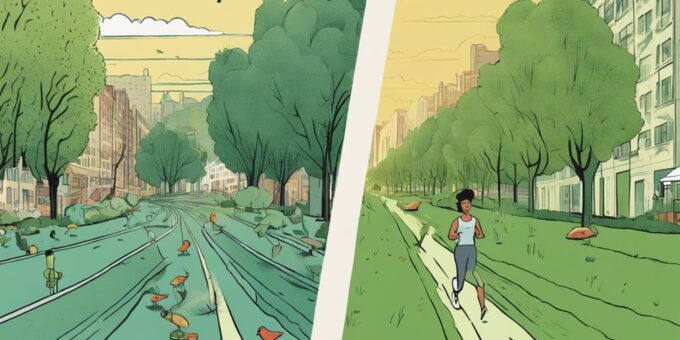
We're often unaware that where we live can greatly impact our health and well-being. Urban and suburban environments have unique advantages and drawbacks that affect our health. Urban living exposes us to pollutants, causing respiratory issues and cardiovascular disease. On the other hand, suburban areas offer green spaces that reduce stress and improve well-being. Access to healthcare, healthy food options, and social support networks also vary greatly between urban and suburban areas. As we explore the complexities of urban vs. suburban living, we'll uncover more surprising differences that ultimately shape our health and happiness.
Urban Air Quality Concerns
As we navigate the concrete jungle, we can't help but breathe in the toxic air that hangs heavy over our cities, a potent cocktail of pollutants that threatens our very health. The urban landscape is a complex web of emissions from vehicles, industrial activities, and construction, all contributing to a hazardous mix of particulate matter, nitrogen dioxide, and ozone. We're talking microscopic pollutants that can penetrate deep into our lungs, triggering respiratory issues, cardiovascular disease, and even premature mortality.
We're not just talking about a minor nuisance; we're talking about a serious health crisis. Studies have shown that urban dwellers are more likely to suffer from asthma, chronic obstructive pulmonary disease (COPD), and other respiratory ailments. The World Health Organization estimates that air pollution is responsible for over 7 million premature deaths worldwide each year. That's a staggering number, and it's hard to ignore the fact that our urban lifestyles are slowly but surely chipping away at our well-being.
As we go about our daily lives, we're constantly exposed to these pollutants, often without even realizing it. We're trapped in a cycle of pollution, and it's taking a toll on our bodies. It's time to take a step back and acknowledge the risks associated with urban air quality. We need to start making conscious choices about our environment, our transportation, and our daily habits to mitigate the effects of pollution. Our health depends on it.
Suburban Green Space Advantages
We often find ourselves escaping to the suburbs in search of a healthier environment, where green spaces abound and the air is fresh, providing a welcome respite from the pollution that plagues our cities. As we trade in the hustle and bustle of urban life for the tranquility of the suburbs, we're not just getting away from the noise and chaos – we're also gaining access to numerous physical and mental health benefits. The abundance of green spaces in suburban areas allows us to reconnect with nature, reducing stress levels and improving our overall well-being.
Studies have shown that living in areas with ample green spaces can lower our risk of chronic diseases, such as heart disease and diabetes. This is likely due to the increased opportunities for physical activity, social interaction, and relaxation that these spaces provide. Additionally, the mental health benefits of suburban green spaces can’t be overstated – the calming effects of nature have been shown to reduce symptoms of anxiety and depression. Furthermore, exposure to nature has been linked to lower stress levels and improved cognitive function, contributing to overall well-being. The health benefits of green spaces extend beyond just physical and mental health—they also promote a sense of community by encouraging social interactions and outdoor activities. As urban areas continue to expand, prioritizing these spaces can play a crucial role in fostering healthier and happier populations.
As we explore the advantages of suburban living, it's clear that the abundance of green spaces is a major draw. By incorporating more green spaces into our daily lives, we can reap the rewards of a healthier, happier lifestyle. Whether it's taking a stroll through the local park or simply enjoying a quiet moment in our own backyard, the benefits of suburban green spaces are undeniable.
Noise Pollution Effects
As we explore the health impacts of urban vs. suburban living, we're faced with the harsh reality of noise pollution effects. We're finding that the constant din of city life is taking a serious toll on our well-being, particularly when it comes to our sleep patterns and cardiovascular health. Specifically, we're seeing a rise in sleep disturbances and an increased risk of cardiovascular disease.
Sleep Disturbances Rise
Living in urban areas exposes us to a cacophony of sounds that disrupt our sleep patterns, leading to a rise in sleep disturbances. We're constantly bombarded by sirens, car horns, and construction noise, making it difficult to get a good night's rest. Studies have shown that noise pollution is a significant contributor to sleep disturbances, and we're paying the price. We're not getting the quality sleep we need, and it's affecting our overall health and wellbeing.
The consequences of sleep disturbances are far-reaching. We're more irritable, less focused, and more prone to anxiety and depression. Our bodies aren't getting the rest they need to repair and rejuvenate, which can lead to a weakened immune system and a host of other health problems. It's a vicious cycle, and one that we need to break. By acknowledging the impact of noise pollution on our sleep, we can start taking steps to mitigate its effects and get the restful sleep we deserve.
Cardiovascular Disease Risk
Prolonged exposure to noise pollution in urban areas increases our risk of developing cardiovascular disease, a condition that claims millions of lives worldwide every year. The constant din of traffic, construction, and sirens can lead to chronic stress, elevated blood pressure, and a higher heart rate – all precursors to cardiovascular disease. In contrast, suburban areas tend to be quieter, reducing our exposure to noise pollution and subsequently, our risk of cardiovascular disease.
| Location | Noise Level (dB) | Cardiovascular Disease Risk |
|---|---|---|
| Urban | 70-90 | High |
| Suburban | 40-60 | Low |
| Rural | 30-50 | Very Low |
The table above illustrates the correlation between noise levels and cardiovascular disease risk. Urban areas, with their high noise levels, pose a significant risk to our cardiovascular health. In contrast, suburban and rural areas, with their lower noise levels, offer a healthier environment for our hearts. By understanding the impact of noise pollution on our health, we can make informed decisions about where we live and work, ultimately reducing our risk of cardiovascular disease.
Healthcare Access Disparities
We often take for granted the ease of scheduling a doctor's appointment or filling a prescription, but the reality is that healthcare access can be a significant challenge for many urban and suburban residents. As we navigate the complexities of urban and suburban living, it's essential to acknowledge the disparities in healthcare access that exist between these two environments.
While we might assume that healthcare access is universally available, the truth is that many individuals face significant barriers in obtaining timely and quality medical care. In urban areas, for instance, there may be a shortage of healthcare providers, leading to long wait times and limited access to specialists. In suburban areas, on the other hand, the lack of public transportation and limited healthcare facilities can make it difficult for residents to access medical care.
The consequences of these disparities are far-reaching. They can lead to delayed diagnoses, poor health outcomes, and increased healthcare costs. To better understand the scope of this issue, consider the following:
- Lack of health insurance: Many urban and suburban residents struggle to afford health insurance, leaving them vulnerable to medical debt and delayed care.
- Limited healthcare providers: Urban areas often have a shortage of healthcare providers, while suburban areas may have limited access to specialized care.
- Transportation barriers: In suburban areas, the lack of public transportation can make it difficult for residents to access healthcare facilities.
- Cultural and language barriers: Language and cultural differences can create significant obstacles to healthcare access, particularly in urban areas with diverse populations.
Urban Mental Health Challenges
As we navigate the complexities of urban living, it's becoming increasingly clear that the high-stress environment, coupled with limited access to healthcare, is taking a toll on our mental wellbeing. The fast-paced, competitive nature of city life can be overwhelming, and the constant noise, pollution, and crowds can be exhausting. It's no wonder that anxiety and depression rates are higher in urban areas.
We're constantly bombarded with stimuli, from the sounds of sirens and car horns to the bright lights and giant billboards. It's easy to feel like we're always "on" and never truly disconnected. And when we do try to take a break, the pressure to stay connected and responsive to work and social demands can be crushing. It's no wonder that many of us struggle to disconnect and unwind.
Moreover, the lack of green spaces and natural environments in urban areas can further exacerbate mental health issues. We're often stuck in concrete jungles, devoid of the calming effects of nature. This can lead to feelings of claustrophobia and disconnection from the natural world. As a result, we're seeing higher rates of mental health disorders, such as anxiety and depression, in urban populations. It's time for us to take a step back and acknowledge the toll that urban living is taking on our mental health.
Suburban Obesity Rates
As we explore the health impacts of suburban living, we're struck by the alarming rates of obesity in these areas. We're going to examine the factors contributing to this trend, including the lack of access to healthy food options, the prevalence of sedentary lifestyle habits, and the urban planning decisions that shape our daily routines. By understanding these key factors, we can work towards creating healthier suburban communities.
Food Desert Access
Living in suburban areas often means limited access to supermarkets and grocery stores, resulting in a higher likelihood of obesity due to the proliferation of food deserts. We've all been there – driving for miles just to find a decent grocery store. This lack of access to healthy food options forces us to rely on convenience stores and fast food chains, which are often high in calories and low in nutrients. As a result, suburban residents are more likely to struggle with obesity and related health issues.
The impact of food deserts on our health is alarming. Here are just a few examples:
- Limited produce options: Fresh fruits and vegetables are scarce in suburban areas, making it difficult to maintain a balanced diet.
- High-calorie convenience: Convenience stores and fast food chains dominate the suburban landscape, tempting us with high-calorie, high-fat options.
- Increased obesity rates: The lack of healthy food options contributes to higher obesity rates in suburban areas.
- Decreased life expectancy: The cumulative effect of poor diet and lack of access to healthy food options can lead to a shorter life expectancy.
We need to acknowledge the role of food deserts in perpetuating suburban obesity rates and work towards creating healthier, more sustainable food systems in our communities.
Sedentary Lifestyle Habits
We often find ourselves stuck in a cycle of sedentary habits, perpetuating suburban obesity rates, especially when our surroundings are designed for driving rather than walking. Our daily routines can be filled with convenience, but at what cost? We're constantly tempted to opt for the easiest, most comfortable option, which often means less physical activity.
| Activity | Urban | Suburban |
|---|---|---|
| Walking to work | 30% | 10% |
| Using public transport | 25% | 5% |
| Driving to work | 45% | 85% |
The data above highlights the stark contrast between urban and suburban living. It's no wonder that suburban areas tend to have higher obesity rates. We need to break free from this sedentary cycle and create environments that encourage physical activity. By doing so, we can reduce the prevalence of obesity and other health issues associated with a sedentary lifestyle. It's time for us to take control of our health and make conscious choices about how we live our daily lives.
Urban Planning Influences
As we explore the health impacts of urban vs. suburban living, it's essential to examine the role of urban planning in shaping our environment and, ultimately, our health.
By designing suburban areas around cars rather than people, urban planners have inadvertently contributed to the rise of suburban obesity rates. This car-centric approach has led to a lack of pedestrian-friendly infrastructure, making it difficult for residents to engage in physical activity. As a result, suburban dwellers are more likely to rely on their cars for transportation, further exacerbating sedentary lifestyle habits.
Here are just a few ways urban planning influences suburban obesity rates:
- Limited pedestrian access: A lack of sidewalks, crosswalks, and pedestrian-friendly roads discourages walking and biking.
- Scattered land use: Separating residential, commercial, and recreational areas forces residents to rely on cars for daily activities.
- Insufficient public transportation: Inadequate public transportation systems make it difficult for residents to get around without a car.
- Urban sprawl: The spread-out nature of suburban areas encourages driving and reduces opportunities for physical activity.
Physical Activity Opportunities
Urban dwellers often find themselves surrounded by a dearth of accessible recreational spaces, facing challenges with the availability of such spaces. This forces us to get creative with our fitness routines. We've learned to adapt, utilizing stairwells, rooftops, and even our own living rooms to squeeze in a workout. But despite our resourcefulness, research suggests that urban residents tend to engage in fewer physical activities compared to their suburban counterparts. This is partly due to the limited availability of safe and accessible outdoor spaces, which can discourage us from engaging in physical activity altogether.
On the other hand, suburban residents often have more opportunities to engage in physical activity, thanks to the abundance of parks, trails, and open spaces. We've noticed that suburban areas tend to have more bike lanes, sidewalks, and recreational facilities, making it easier for residents to incorporate physical activity into their daily routines. Additionally, the availability of backyards and outdoor spaces in suburban areas provides ample opportunities for outdoor activities like gardening, sports, and simply enjoying the fresh air.
While urban dwellers may face more challenges with the availability of accessible recreational spaces, it's not all doom and gloom. We've seen a surge in innovative fitness solutions, such as pop-up yoga classes in parks and underground fitness studios, that cater specifically to urban residents. By embracing these creative solutions, we can stay active and healthy despite the limitations of our urban environment.
Environmental Toxins Exposure
Living in urban areas, we're more likely to breathe in polluted air, drink contaminated water, and come into contact with toxic substances in our daily environments. This exposure to environmental toxins can have serious consequences for our health, from respiratory problems to increased risk of cancer. We're constantly surrounded by pollutants, from car exhaust to industrial waste, which can seep into our air, water, and soil.
Unfortunately, it's not just the air we breathe that's a concern. Our water supply is also at risk of contamination, and we may unknowingly ingest toxins through our tap water. Even the food we eat can be tainted with pesticides and heavy metals, further increasing our exposure.
The list of potential toxins is long, but here are just a few examples:
- Particulate matter (PM): Tiny particles in the air that can cause respiratory issues and other health problems.
- Polychlorinated biphenyls (PCBs): Toxic chemicals found in industrial waste, which have been linked to cancer and reproductive issues.
- Pesticides: Chemicals used in agriculture that can contaminate our food and water supply, leading to neurological and developmental problems.
- Volatility organic compounds (VOCs): Toxic chemicals released from everyday products like paint, cleaning supplies, and furniture, which can cause respiratory issues and cancer.
Community Social Support Networks
We rely on our community social support networks to help us cope with the stresses of urban life, and research suggests that strong social connections can have a profound impact on both our mental and physical health. Living in urban areas can be overwhelming, and having a support system in place can make all the difference. When we feel connected to those around us, we're more likely to feel a sense of belonging, which is essential for our well-being.
Urban dwellers often have smaller social networks compared to their suburban counterparts. This can lead to feelings of loneliness and isolation, which can negatively impact our mental health. On the other hand, suburban residents tend to have stronger community ties, with neighbors who know and look out for one another. This sense of community can be a powerful tool in reducing stress and anxiety.
When we have strong social connections, we're more likely to engage in healthy behaviors, such as regular exercise and healthy eating. We're also more likely to seek help when we need it, whether that's for mental health support or medical care. By contrast, urban isolation can lead to a lack of motivation and a sense of disconnection, making it harder to prioritize our health. By building and maintaining strong community social support networks, we can take a significant step towards improving our overall health and well-being.
Frequently Asked Questions
How Does Urban Planning Impact Mental Health in City Dwellers?
We've often wondered how the built environment affects our minds. Specifically, we're curious about how urban planning impacts our mental wellbeing. Research suggests that well-designed cities can boost our mood and reduce stress. On the other hand, poorly planned spaces can exacerbate anxiety and depression. We're convinced that urban planners play a vital role in promoting mental health. By incorporating green spaces, pedestrian-friendly areas, and community hubs, they can create cities that support our mental wellbeing.
Are Suburban Areas More Prone to Natural Disasters Than Cities?
As we navigate the landscape of suburban living, we're caught in a storm of uncertainty. Just like a house of cards, our sense of security can come crashing down when natural disasters strike. And, surprisingly, suburban areas are more prone to natural disasters than cities. Without the infrastructure and emergency response systems in place, suburban residents are often left to weather the storm alone.
Can Urban Gardens Mitigate the Effects of Air Pollution?
We're curious about the power of urban gardens in cleaning the air we breathe. Can they really mitigate the effects of air pollution? Research suggests yes! Urban gardens act as natural air purifiers, absorbing pollutants like particulate matter, ozone, and nitrogen dioxide. By incorporating green spaces into city planning, we can reduce air pollution's negative impacts on our health. It's a simple yet effective way to create healthier urban environments.
Do Suburban Residents Have Better Access to Healthy Food Options?
As we wander through the suburban landscape, a cornucopia of fresh produce unfolds before our eyes. But do suburban residents really have better access to healthy food options? We think so. Compared to urban areas, suburban neighborhoods tend to have more supermarkets and farmers' markets, making it easier to snag a crunchy apple or a juicy tomato. It's a peach of a deal for suburbanites, who can savor the taste of fresh, locally sourced food.
How Do Zoning Laws Influence Community Social Support Networks?
As we explore the impact of zoning laws on community social support networks, we find that restrictive zoning can inadvertently isolate residents. By limiting mixed-use development and prioritizing single-family homes, we're left with fewer public spaces for socializing. This can lead to a sense of disconnection among neighbors, making it harder to build strong support networks. We believe that zoning laws should prioritize community engagement and interaction to foster a stronger sense of community.
