
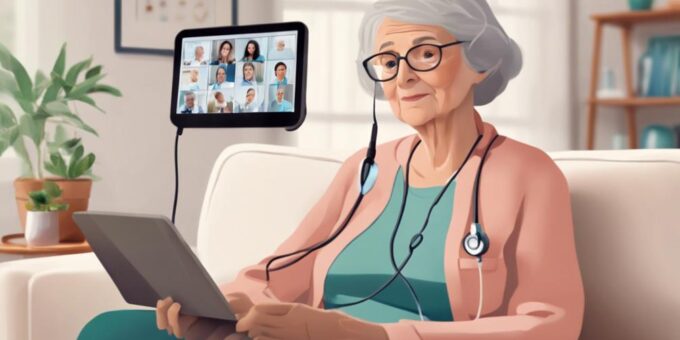
We’ve seen a significant shift in home health care since integrating telemedicine, particularly in rural areas where access was previously limited. We’re now connecting patients with specialized care through virtual consultations, addressing healthcare professional shortages, and improving health outcomes while reducing costs. By empowering patients with digital tools and enhancing remote monitoring, we’re seeing better engagement and more timely interventions. As we continue to harness telemedicine’s potential, we’re uncovering new opportunities to transform the way we deliver care – and there’s still more to explore in this evolving landscape. Additionally, the integration of tech innovations in home security is complementing telemedicine by ensuring a safer environment for patients receiving remote care. Smart monitoring systems and AI-powered alerts help caregivers and healthcare providers respond swiftly to potential emergencies, enhancing both medical outcomes and overall well-being. As technology continues to advance, the synergy between telemedicine and home security solutions will further redefine the future of home health care.
Expanding Access to Rural Areas
By harnessing the power of telemedicine, we're bridging the healthcare gap in rural areas, where limited access to medical specialists and facilities has long been a stark reality. For years, rural communities have struggled to access quality healthcare, forcing them to travel long distances or rely on limited local resources. But with telemedicine, we're changing that narrative.
We're connecting rural patients with specialized care, regardless of their geographical location. Through virtual consultations, patients can receive timely diagnoses, treatments, and ongoing care from the comfort of their own homes. This not only saves time and resources but also reduces the risk of complications that can arise from delayed medical attention.
Moreover, telemedicine is enabling us to address the shortage of healthcare professionals in rural areas. By leveraging technology, we're able to remotely monitor patients, track essential signs, and receive real-time updates on their condition. This allows us to respond promptly to changes in their health, ensuring timely interventions and better health outcomes.
As we continue to expand telemedicine services, we're seeing improved health outcomes, increased patient satisfaction, and a reduction in healthcare costs. By breaking down geographical barriers, we're creating a more equitable healthcare system that truly serves all communities, regardless of their zip code.
Improving Patient Engagement Rates
Through personalized digital platforms and interactive tools, we're empowering patients to take a more active role in their care, which leads to significant improvements in patient engagement rates. This is important because engaged patients are more likely to adhere to treatment plans, take their medications as prescribed, and make healthy lifestyle choices. As a result, we're seeing better health outcomes and reduced hospital readmissions.
We're also using telemedicine to facilitate more frequent and meaningful interactions between patients and healthcare providers. Video conferencing, for instance, enables patients to connect with their care teams from the comfort of their own homes, reducing barriers to care and increasing the likelihood of patients seeking help when they need it. Moreover, we're leveraging data analytics to identify patients who are at risk of disengaging from their care plans, allowing us to intervene early and provide targeted support.
Enhancing Remote Monitoring Capabilities
We're taking remote monitoring to the next level by outfitting patients with wearable devices and mobile apps that track essential signs, detect anomalies, and trigger alerts when interventions are needed. This allows us to respond quickly to potential health crises, ensuring timely interventions and preventing hospitalizations. By leveraging advanced analytics and machine learning algorithms, we're able to identify patterns and trends in patient data, enabling proactive care and personalized treatment plans.
Here are some ways we're enhancing remote monitoring capabilities:
- Real-time essential sign tracking: Patients' essential signs, such as heart rate, blood pressure, and oxygen saturation, are transmitted in real-time, enabling swift responses to changes in their condition.
- AI-powered anomaly detection: Advanced algorithms detect unusual patterns in patient data, alerting caregivers to potential issues before they escalate.
- Patient engagement platforms: User-friendly apps and portals empower patients to take a more active role in their care, promoting education, adherence, and self-management.
- Seamless EHR integration: Remote monitoring data is seamlessly integrated into electronic health records, ensuring a complete view of patient health.
- Care coordination and collaboration: Remote monitoring enables care teams to collaborate more effectively, ensuring cohesive, patient-centered care.
Reducing Healthcare Costs Effectively
As we aim to create a more sustainable healthcare system, our dedication to reducing healthcare costs effectively becomes a critical component of delivering high-quality, patient-centered care. Telemedicine has proven to be a game-changer in this regard, allowing us to provide more efficient and cost-effective care to our patients.
By leveraging telemedicine, we can reduce the need for hospitalizations, emergency department visits, and other costly healthcare services. Remote consultations and monitoring enable us to identify potential health issues earlier, preventing complications that can lead to costly interventions. In addition, telemedicine eliminates the need for patients to travel to healthcare facilities, reducing transportation costs and lost productivity.
We've also seen significant reductions in hospital readmissions, which are a major driver of healthcare costs. By providing patients with timely and convenient access to care, we can reduce the likelihood of hospital readmissions and the associated costs. Additionally, telemedicine enables us to optimize resource allocation, reducing waste and inefficiencies in the healthcare system.
Increasing Timely Medical Interventions
By harnessing the power of telemedicine, we can intervene earlier in the care process, responding quickly to patients' changing health needs and reducing the risk of complications. This allows us to address potential issues before they escalate into more severe problems, improving patient outcomes and reducing the likelihood of hospital readmissions.
In traditional care settings, delayed interventions can lead to worsening health conditions, increased healthcare costs, and decreased patient satisfaction. Telemedicine bridges this gap by enabling remote monitoring, real-time data exchange, and timely consultations. As a result, we can identify potential health concerns earlier, respond promptly, and provide targeted interventions to prevent complications.
Some key benefits of timely medical interventions via telemedicine include:
- Early detection and treatment of chronic conditions, reducing the risk of acute episodes and hospitalizations
- Real-time monitoring and response to medication side effects, minimizing adverse reactions and ensuring the best treatment
- Proactive wound care management, reducing the risk of infection and promoting faster healing
- Enhanced patient engagement and education, empowering individuals to take a more active role in their care
- Streamlined communication and collaboration, ensuring that all healthcare providers are on the same page, always
Revolutionizing Chronic Care Management
Through timely interventions, we're able to address chronic conditions more effectively, and now, with telemedicine, we're poised to revolutionize chronic care management by providing ongoing, high-quality support to patients with complex needs. By leveraging telemedicine, we can bridge the gap between hospital stays and home care, ensuring that patients receive seamless, continuous care. This is particularly essential for patients with chronic conditions, who often require frequent monitoring and adjustments to their treatment plans.
Telemedicine enables us to remotely monitor patients' vital signs, track medication adherence, and respond promptly to changes in their condition. This proactive approach helps prevent complications, reducing hospital readmissions and improving health outcomes. Additionally, telemedicine facilitates multidisciplinary collaboration, allowing healthcare professionals to coordinate care and share insights more effectively. This leads to more targeted interventions, better patient engagement, and enhanced overall well-being.
Frequently Asked Questions
Can Telemedicine Replace In-Person Doctor Visits for Home Health Care?
Can we really ditch in-person doctor visits for the convenience of telemedicine? We're not so sure. While telemedicine is super convenient, there are times when a doctor's physical presence is essential. We think it's a great supplement to traditional care, but not a replacement. There's just no substitute for a doctor's touch, literally.
Are Telemedicine Services Covered by Medicare and Private Insurance?
We're curious about insurance coverage for telemedicine services. Luckily, Medicare and many private insurance providers cover some telemedicine services, but it depends on the specific plan and state. We've found that Medicare covers telemedicine for rural areas, while private insurers may have varying policies. We recommend checking our insurance plans to see what's covered, as it's constantly evolving.
How Do Patients Access Telemedicine Services Without Reliable Internet?
We're often asked how patients can access telemedicine services without reliable internet. Honestly, it's a hurdle many face. We've found that some healthcare providers offer alternative solutions, like phone-based consultations or mobile hotspots. Others have partnered with community centers or libraries with internet access, allowing patients to connect with care teams. We're striving to guarantee equal access to telemedicine for all, regardless of internet connectivity.
Are Telemedicine Platforms Secure and Hipaa-Compliant?
We're concerned about the security of our health data, so we're digging into telemedicine platforms' security measures. We're relieved to find that reputable platforms prioritize HIPAA compliance, using encryption and secure servers to protect our info. They also implement robust access controls, like two-factor authentication, to guarantee only authorized personnel can access our records. We're convinced that these safeguards minimize the risk of data breaches, giving us peace of mind.
Can Telemedicine Be Used for Emergency Situations or Only Routine Care?
We're often caught between the urgency of emergency situations and the comfort of routine care. But can telemedicine really bridge this gap? In emergency situations, every minute counts, and telemedicine's remote nature raises concerns. Yet, it can be a lifesaver in remote areas or when hospitals are inaccessible. We've seen it work for routine care, but can it handle the high-stakes of emergencies?
