
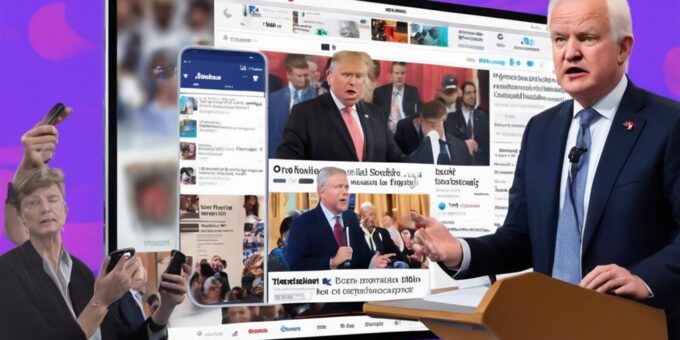
As you scroll through your social media feeds, you're likely to stumble upon political campaign ads, news articles, and heated debates. But have you ever stopped to think about the significant impact social media has on political campaigns and news distribution? You're about to enter a world where candidates bypass traditional media to connect directly with you, where information spreads like wildfire, and where the lines between fact and fiction blur. But what does this mean for democracy, and how will it shape the future of political discourse?
Campaign Strategies in the Digital Age
As you develop a political campaign strategy in the digital age, you're likely to find that social media platforms have become indispensable tools for reaching and engaging with potential voters. With millions of users, social media platforms offer an unparalleled opportunity to connect with your target audience, build brand awareness, and disseminate your message.
To maximize your online presence, you'll need to craft a thorough social media strategy that integrates seamlessly with your overall campaign plan. This involves identifying your target audience, creating engaging content, and allocating resources effectively. Since social media is a two-way communication channel, it's essential to monitor and respond to comments, messages, and reviews in a timely and personalized manner.
Social Media's Impact on Voter Engagement
By leveraging social media, you can greatly enhance voter engagement by providing a platform for citizens to discuss, debate, and share their opinions on key political issues. This increased engagement leads to a more informed electorate, as voters can access a wealth of information about candidates, their policies, and political ideologies. Social media platforms also enable citizens to hold politicians accountable by demanding transparency and responsiveness.
Additionally, social media can be used to mobilize supporters, organize rallies, and promote get-out-the-vote campaigns. Furthermore, social media analytics provide valuable insights into voter sentiment, allowing campaigns to refine their strategies and tailor their messages to specific demographics. This targeted approach helps to increase voter turnout, particularly among marginalized communities that have historically been disenfranchised. By leveraging marketing analytics techniques, political campaigns can identify trends in voter behavior and adjust their outreach efforts accordingly. These techniques enable campaigns to optimize their advertisements, ensuring that their messages resonate with key audiences. As a result, social media becomes a powerful tool for increasing civic engagement and strengthening democratic participation.
In addition, social media facilitates a two-way conversation between politicians and their constituents. You can engage with voters directly, respond to their concerns, and provide real-time updates on policy initiatives. This direct communication fosters a sense of ownership and accountability, encouraging citizens to take a more active role in the democratic process. By harnessing the power of social media, you can create a more participatory and inclusive political environment that empowers citizens to shape their own political destinies.
News Distribution and Information Flow
You turn to social media to stay informed about current events, and that's exactly what millions of others do, making it an essential platform for news distribution and information flow during political campaigns. With the rise of social media, the way people consume news has drastically changed. Gone are the days of relying solely on traditional news outlets; instead, you can now access a vast array of news sources and stories with just a few clicks.
Social media platforms have become critical channels for news distribution, allowing you to stay up-to-date on current events in real-time. You can follow news organizations, journalists, and politicians to get the latest updates on political campaigns. Additionally, social media algorithms prioritize content that's relevant to your interests, making it easier for you to discover news and information that matters to you.
As a result, social media has become an essential platform for politicians and political parties to disseminate information and reach a wider audience. By leveraging social media, they can share their messages, policies, and campaign updates directly with you, bypassing traditional media outlets. This direct communication enables you to engage more deeply with political campaigns and make more informed decisions at the polls.
The Spread of Misinformation Online
Since the dawn of social media, the spread of misinformation online has become a pervasive problem, affecting the credibility of news sources and ultimately, the democratic process itself. You've likely encountered fake news articles, manipulated images, or misleading tweets that seem authentic. The ease of sharing information online has made it difficult to distinguish fact from fiction. Misinformation can spread rapidly, often going viral before the truth has a chance to catch up.
As you scroll through your social media feeds, you're exposed to a curated version of reality. Algorithms prioritize sensational or provocative content, which can be misleading or false. You might see a sensational headline, and before fact-checking, you're tempted to share it with your network. This creates a ripple effect, where misinformation spreads quickly, often going unchecked.
You're not alone in this struggle. A study found that 60% of people share articles without reading them, and 75% of people don't fact-check information before sharing. The consequences are severe: misinformation can sway public opinion, influence elections, and erode trust in institutions. As a responsible digital citizen, it's essential for you to critically evaluate the information you consume and share online. Verify information through reputable sources, and be cautious of biased or sensational content. By being vigilant, you can help prevent the spread of misinformation and promote a more informed online community.
Regulating Social Media in Politics
Social media platforms have become essential battlegrounds in modern political campaigns, but their unregulated nature has sparked intense debate about the need for stricter oversight. As you navigate the complex world of online political discourse, you may wonder how these platforms can be held accountable for the content they host. The lack of regulation has led to the proliferation of misinformation, manipulation, and interference in elections.
You're not alone in thinking that something needs to change. Governments, policymakers, and social media companies are grappling with the challenges of regulating social media in politics. The question is, how can we strike a balance between free speech and responsible governance?
Here are some potential solutions:
- Transparency regulations: Require social media companies to disclose more information about political advertising, including the sources of funding and targeting criteria.
- Independent oversight bodies: Establish independent bodies to monitor and enforce regulations, ensuring that social media companies comply with the rules.
- Content moderation guidelines: Develop clear guidelines for content moderation, ensuring consistency and fairness in the removal of harmful or misleading content.
- Political advertising restrictions: Implement restrictions on political advertising, such as banning certain types of targeting or requiring more transparency in ad content.
- International cooperation: Foster international cooperation to address the global nature of social media and its impact on political discourse.
You're probably thinking, "This is a complex issue, and there's no one-size-fits-all solution." You're right. Regulating social media in politics will require ongoing dialogue, experimentation, and adaptation.
Frequently Asked Questions
Can Politicians Legally Buy Followers on Social Media?
You're wondering if politicians can legally pad their online influence by buying followers. It's a question that lurks in the shadows of the digital world, like a ghost in the machine. The answer is a resounding maybe. While there's no explicit law prohibiting the practice, buying followers violates most social media platforms' terms of service. So, politicians can technically do it, but they risk having their accounts suspended or terminated if caught.
How Do Social Media Algorithms Impact Political Advertising?
You're probably aware that social media algorithms play a huge role in what you see online. When it comes to political advertising, these algorithms can be particularly influential. They determine which ads are shown to which users, and when. This can greatly impact the effectiveness of a political campaign's online strategy. You might see certain ads repeatedly, while others are hidden from your feed. These algorithms can also amplify biases and create "filter bubbles."
Are Social Media Influencers Required to Disclose Political Ads?
You're wondering if social media influencers must disclose political ads. The answer is yes, they are required to do so. The Federal Trade Commission (FTC) mandates that influencers clearly label sponsored content, including political ads, with #ad, #sponsored, or #paid. This transparency helps you, the user, understand when an influencer is promoting a political candidate or cause for financial gain.
Can Social Media Companies Censor Political Opinions?
You're scrolling through your feed, and suddenly, a friend's post about a hot political topic catches your eye. But wait, where's the opposing viewpoint? You start wondering, can social media companies censor political opinions? The answer's not a simple yes or no. While they can't restrict speech, they can set community standards, remove harmful content, and prioritize certain posts over others. It's a delicate balance between free speech and maintaining a safe online environment.
Do Social Media Companies Have a Bias in Political Content Moderation?
You're wondering if social media companies have a bias in political content moderation. It's a valid concern, as allegations of censorship and favoritism are rampant. While companies claim to be neutral, research suggests otherwise. Studies have shown that certain platforms disproportionately remove content from specific political groups, sparking accusations of bias. You're right to question their motives, and it's essential to hold these companies accountable for fair moderation practices.
