
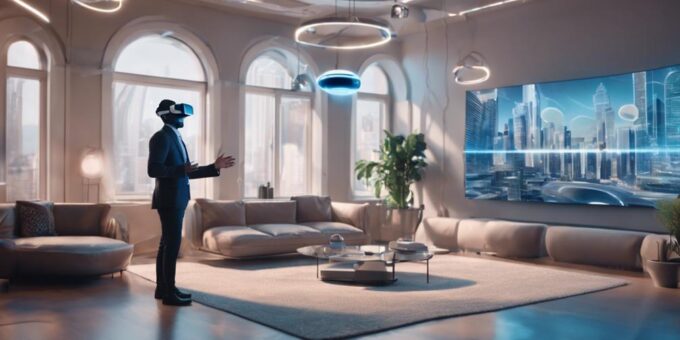
As you step into the world of real estate marketing, you're about to discover a game-changer: Virtual Reality. Imagine being able to explore properties remotely, immersing yourself in 360-degree views, and getting a true sense of a space before ever setting foot in it. It's no longer just about browsing static listings – VR is redefining the homebuying experience. But how exactly is this technology transforming the industry, and what does it mean for buyers, sellers, and agents alike? The impact is significant, and it's only the beginning.
Enhancing Property Listings
By incorporating virtual reality (VR) into your property listings, you can transport potential buyers into the heart of a property, allowing them to explore every nook and cranny from the comfort of their own homes. This immersive experience gives buyers a deeper understanding of the property, helping them visualize themselves living there. With VR, you can showcase a property's best features, highlighting its unique selling points and creating an emotional connection with potential buyers.
You can also use VR to highlight specific design elements, such as high ceilings or natural light, which can be difficult to capture through traditional photographs. Additionally, VR allows buyers to explore properties at their own pace, taking as much time as they need to examine every detail. This level of engagement increases the chances of attracting serious buyers who are more likely to make an offer.
Redefining Open Houses
You're about to revolutionize the way you show properties with virtual open houses, allowing potential buyers to explore listings from the comfort of their own homes. By leveraging virtual reality, you can provide an immersive and interactive experience that's more engaging than traditional 2D listings. This new approach enables buyers to explore properties in greater detail, increasing the chances of attracting serious buyers and reducing the need for physical open houses.
Virtual Tours Advantage
With virtual tours, you can redefine the traditional open house experience, allowing potential buyers to explore properties at their own pace, 24/7, and from anywhere in the world. This flexibility is especially useful for out-of-town buyers or those with busy schedules. You can also reduce the likelihood of no-shows, as buyers can explore properties virtually before scheduling an in-person visit.
Virtual tours offer an immersive experience, allowing buyers to get a better feel for the property's layout and features. You can include interactive elements, such as hotspots, videos, and photos, to provide a more engaging experience. Additionally, you can include virtual staging, allowing buyers to visualize the property with furniture and decor.
Enhanced Property Exploration
As you step into the virtual world, you're no longer limited by physical boundaries, exploring properties in a more immersive and interactive way that redefines the traditional open house experience. You can walk through rooms, explore every nook and cranny, and get a true sense of the property's layout and features. This enhanced exploration experience not only saves time but also reduces the need for physical visits, making the entire process more efficient.
Here are just a few benefits of enhanced property exploration in virtual reality:
- Increased engagement: Interactive and immersive experiences lead to higher engagement rates, keeping potential buyers invested in the property.
- Time-saving: Virtual exploration eliminates the need for multiple physical visits, saving time for both buyers and agents.
- Personalized experience: Viewers can explore the property at their own pace, focusing on the features that matter most to them.
- Cost-effective: Reduced physical visits translate to lower costs for travel, transportation, and other logistics.
Virtual Reality Tours
Virtual reality tours are revolutionizing the real estate industry by allowing potential buyers to explore properties remotely, reducing the need for physical viewings and saving time for agents and clients alike. You can now immerse yourself in a virtual environment, exploring every nook and cranny of a property from the comfort of your own home. This technology is especially beneficial for out-of-town buyers or those with busy schedules, as it eliminates the need for multiple physical visits.
With virtual reality tours, you can walk through a property, inspecting every detail, from the layout of the rooms to the quality of the finishes. You can even use controllers to interact with objects, such as opening cabinets or switching on lights. This level of immersion helps you better understand the layout and flow of a property, making it easier to decide if it's the right fit for you.
Moreover, virtual reality tours provide an unparalleled level of transparency, allowing you to make more informed purchasing decisions. You can explore properties at your own pace, taking as much time as you need to examine every aspect of the property. With virtual reality tours, you're not limited by the constraints of physical viewings, making the home-buying process more efficient and enjoyable.
Changing Buyer Behavior
As you navigate the changing landscape of real estate marketing, you're likely to notice a significant shift in buyer behavior. With virtual tours on the rise, you're seeing a growing demand for immersive experiences that allow buyers to explore properties remotely. As a result, you're tasked with creating personalized experiences that cater to these evolving expectations, and that's where virtual staging and customized tours come into play.
Virtual Tours Rise
Your online house hunt is about to get a whole lot more realistic, with virtual tours revolutionizing the way you explore properties from the comfort of your own home. Gone are the days of scrolling through low-quality photos and trying to imagine yourself in a space. With virtual tours, you can explore properties remotely, getting a true sense of the layout, natural light, and overall feel of a home.
Here are just a few ways virtual tours are changing the game:
- Increased engagement: Virtual tours encourage you to interact with properties in a more immersive way, leading to a more engaging and memorable experience.
- Time-saving: You can explore multiple properties in a fraction of the time it would take to physically visit each one.
- Better decision-making: With a more accurate sense of a property's layout and features, you can make more informed decisions about which properties are right for you.
- Reduced costs: By weeding out properties that aren't a good fit, you can reduce the time and money spent on physical viewings.
Virtual Staging Grows
By allowing you to visualize furniture and decor in a vacant property, virtual staging is changing the way you shop for a home, making it easier to imagine yourself living in a space. This technology has become increasingly popular, as it helps buyers better understand the layout and potential of a property. With virtual staging, you can see how a space could be used, rather than just imagining it.
| Benefits | Description |
|---|---|
| Increased Engagement | Virtual staging grabs your attention, making you more likely to engage with the property. |
| Better Visualization | It helps you visualize the space, making it easier to imagine yourself living there. |
| Time-Saving | You can quickly see how furniture and decor fit in the space, saving you time and effort. |
| Emotional Connection | Virtual staging creates an emotional connection, helping you fall in love with the property.
Personalized Experience Matters
With virtual reality technology, you're no longer limited to generic online listings or in-person viewings, now you can step into a personalized, immersive experience that's tailored to your unique preferences and needs. This shift in buyer behavior is revolutionizing the way you interact with potential properties, allowing you to make more informed decisions and reducing the time spent on physical viewings.
Here are four ways virtual reality is transforming the home buying experience:
- Customized property tours: Explore properties at your own pace, focusing on the features that matter most to you.
- Interactive floor plans: Visualize your furniture and decor in the space, ensuring a perfect fit.
- Real-time modifications: See how different design elements, such as lighting or color schemes, impact the space.
- Emotional connection: Develop a deeper emotional connection with a property, allowing you to envision your life in the space.
Increasing Property Sales
Using virtual reality, you can boost property sales by up to 10% by providing potential buyers with an immersive and engaging experience that helps them better visualize themselves in the space. This isn't just a claim; it's backed by research that shows how VR can increase buyer engagement and confidence in their purchasing decisions. With VR, you can give potential buyers a sense of ownership, allowing them to explore every nook and cranny of the property from the comfort of their own homes.
You can also use VR to showcase properties that are still under construction or in the planning phase. This allows buyers to visualize the final product and make more informed decisions about their purchase. Additionally, VR can help reduce the number of physical property visits, saving time and resources for both you and the buyer. By providing an immersive and interactive experience, you can build trust with potential buyers and establish a connection with them on a deeper level. This can lead to increased buyer satisfaction and, ultimately, more sales. With VR, you can stay ahead of the competition and provide a unique selling experience that sets you apart from other real estate agents.
Reducing Marketing Costs
You can slash your marketing budget without sacrificing effectiveness by leveraging virtual reality to create immersive experiences that resonate with potential buyers. Traditional marketing methods, such as physical open houses and printed brochures, can be costly and inefficient. With virtual reality, you can reduce the need for physical property visits, minimizing the resources spent on logistics and staffing. Additionally, augmented reality in marketing allows potential buyers to visualize properties with interactive 3D models, enhancing their engagement without requiring an in-person visit. This innovative approach not only saves costs but also provides a more personalized and convenient experience for customers. By integrating both virtual and augmented reality in marketing strategies, businesses can stay ahead of the competition while maximizing efficiency.
By embracing virtual reality, you can:
- Reduce physical open house costs: No more expensive staging, cleaning, and staffing for physical open houses.
- Minimize print and distribution costs: Say goodbye to pricey brochures, flyers, and mailers.
- Decrease traveling costs: No more flying or driving to remote locations to showcase properties.
- Lower photography and videography costs: Virtual reality experiences can be created using 3D scans and virtual staging, reducing the need for expensive photography and videography services.
Personalized Virtual Experiences
You're about to explore the most immersive and engaging aspect of virtual reality in real estate marketing: personalized virtual experiences. With virtual property walkthroughs, you'll be able to explore every nook and cranny of a property from the comfort of your own home. By leveraging immersive space exploration, you'll get a true sense of a property's layout, flow, and overall feel.
Virtual Property Walkthroughs
Stepping into a virtual property walkthrough, you're transported to a fully immersive environment where every detail, from the layout to the lighting, is tailored to your unique preferences and needs. You're not just viewing a property; you're experiencing it. Every aspect of the virtual walkthrough is designed to make you feel like you're actually there, allowing you to make a more informed decision about the property.
Here are just a few ways virtual property walkthroughs are revolutionizing the home buying process:
- Personalized exploration: Explore the property at your own pace, focusing on the features that matter most to you.
- Realistic expectations: Get an accurate sense of the property's layout, size, and condition, reducing the risk of buyer's remorse.
- Increased engagement: Interactive hotspots and virtual "info flags" provide additional information and insights, keeping you engaged and informed.
- Reduced costs: Minimize the need for physical property visits, saving you time and money.
Immersive Space Exploration
With immersive space exploration, every virtual experience is tailored to your unique preferences, allowing you to dive deeper into the property's layout, design, and features. You're no longer limited to a standard, pre-set virtual tour. Instead, you can customize your experience to focus on the aspects that matter most to you. Want to explore the master bedroom's walk-in closet in more detail? You can do that. Curious about the backyard's outdoor kitchen? You can zoom in on that too. This level of personalization enables you to make more informed decisions about a property, all from the comfort of your own home.
As you explore the virtual space, you'll be able to interact with the environment in a more meaningful way. You can open cabinets, turn on lights, and even change the color of the walls to see how they'd look with your own furniture. The immersive experience simulates the sensation of being physically present in the space, allowing you to build an emotional connection with the property. By the time you visit the property in person, you'll already feel like you know it inside and out.
Targeting Tech-Savvy Buyers
As tech-savvy buyers increasingly dominate the market, they're looking for an immersive and interactive experience that lets them explore properties from the comfort of their own homes. You can't blame them – who wouldn't want to explore a potential new home without having to physically visit it? Virtual reality (VR) technology has made this possible, and as a real estate marketer, you need to tap into this trend.
By incorporating VR into your marketing strategy, you'll be able to attract and engage with tech-savvy buyers on a whole new level. Here are some key benefits of targeting this demographic:
- Increased engagement: VR experiences are proven to increase user engagement and interaction, leading to more qualified leads and higher conversion rates.
- Cost savings: By allowing buyers to explore properties virtually, you can reduce the number of physical viewings, saving time and resources.
- Competitive advantage: By embracing VR technology, you'll set yourself apart from competitors and establish your brand as a leader in the industry.
- Accurate expectations: VR allows buyers to get a true sense of a property's layout and features, reducing the likelihood of disappointment or miscommunication.
Creating Immersive Storytelling
You're about to transport potential buyers into the heart of a property, and that's where the magic of immersive storytelling begins. With virtual reality, you're not just showing a house – you're crafting an experience that lets buyers envision themselves living there. You're giving them a sense of ownership, of belonging, and of possibility. It's no longer just a listing; it's a journey.
As you weave your narrative, consider the emotional connections buyers form with a property. Maybe it's the natural light pouring through the skylight, or the way the backyard feels like a private oasis. Whatever it is, amplify it. Use VR to highlight the little details that make a house feel like home. Let buyers explore the space at their own pace, taking in the sights, sounds, and sensations that make this property special.
Your immersive storytelling is more than just a sales pitch; it's an invitation to imagine a new chapter of life. You're not just selling a house – you're selling a lifestyle. And with VR, you're giving buyers the keys to experience that lifestyle, to explore it, and to make it their own. The result? Buyers are more engaged, more invested, and more likely to fall in love with the property.
Future of Real Estate Marketing
In the not-too-distant future, virtual reality is poised to revolutionize real estate marketing by transforming the way properties are bought, sold, and experienced. You'll no longer need to physically visit a property to get a sense of its layout, features, and atmosphere. With VR, you'll be able to explore properties remotely, 24/7, and get a more immersive and engaging experience than traditional 2D photos and videos can provide.
As VR technology continues to advance, you can expect to see even more innovative applications in real estate marketing. Here are a few examples of what you might expect to see:
- Virtual open houses: Imagine being able to attend an open house from the comfort of your own home, or even from a different city or country. With VR, this will become a reality.
- Personalized property tours: You'll be able to customize your property tours based on your specific needs and preferences, such as viewing a property at different times of day or in different lighting conditions.
- Virtual staging: You'll be able to see how a property would look with different furniture, decor, and layouts, making it easier to imagine yourself living in the space.
- Data-driven decision making: With VR, you'll have access to a wealth of data and analytics about the property and the local market, making it easier to make informed decisions about your purchase.
As VR continues to transform the real estate industry, you can expect to see new and innovative applications emerge. One thing is certain: the future of real estate marketing is going to be exciting!
Frequently Asked Questions
Can Virtual Reality Replace Human Real Estate Agents Entirely?
You're wondering if virtual reality can replace human real estate agents entirely. In many industries, technology has automated tasks, making some jobs obsolete. However, in real estate, agents provide emotional support, negotiate deals, and offer valuable insights. While VR can showcase properties, it can't replicate human interaction and empathy. You'll still need a human touch to finalize deals and provide personalized services.
Are Virtual Reality Headsets Required for Buyers to Participate?
Imagine stepping into a luxurious mansion, without leaving your living room. You're about to find out if a magic window to these virtual domains requires a special key – a virtual reality headset. The answer is no, you don't need one. With desktop and mobile compatibility, you can explore virtual tours and interactive 3D models without any special gear, making it accessible to everyone. This opens doors to a world of possibilities, where you can explore properties from the comfort of your own home.
How Do Virtual Reality Tours Handle Complex Architectural Designs?
When exploring virtual reality tours, you'll find that they can handle complex architectural designs by using 3D modeling and rendering techniques. These tools allow for accurate representations of intricate details, such as curved lines, asymmetrical shapes, and multi-level spaces. You'll be able to navigate through virtual tours seamlessly, getting a realistic sense of the property's layout and design. This immersive experience enables you to better understand the property's unique features and visualize yourself living or working there.
Can Virtual Reality Be Used for Commercial Property Marketing Too?
You're wondering if virtual reality can be used for commercial property marketing. The answer is yes, you can leverage VR to showcase properties like office buildings, retail spaces, or warehouses. This technology allows potential buyers or tenants to explore and interact with the space remotely, saving time and increasing engagement. You can create immersive experiences that highlight key features, such as layout, amenities, and accessibility.
Are There Any Data Privacy Concerns With Virtual Reality in Real Estate?
You're probably wondering if using virtual reality in real estate raises data privacy concerns. Yes, it does. When you use VR, you're collecting sensitive info like location data, search history, and personal preferences. If not managed properly, this data can be misused or fall into the wrong hands. You'll need to make sure you're complying with data protection regulations and taking steps to safeguard client information.
