
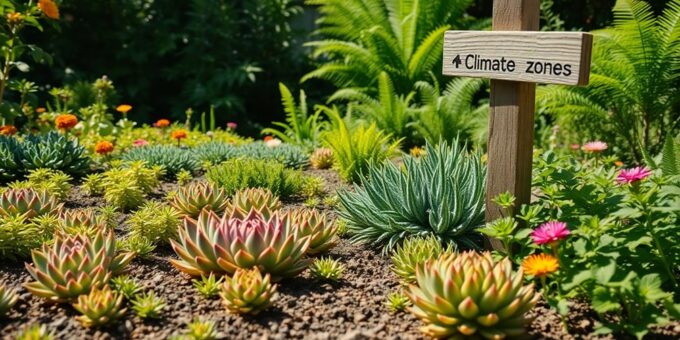
To plan your garden based on local climate zones, start by using the USDA Plant Hardiness Zone Map to identify your zone. Consider typical first and last frost dates for planting timing. Choose plants that thrive in your specific zone as well as factoring in local microclimates and soil types. Don’t forget to track temperatures and use season-extending methods like cold frames. If you’re curious about selecting the right plants, there’s more to discover.
Article Highlights
- Identify your USDA Plant Hardiness Zone to understand the average minimum temperatures for suitable plant selection.
- Research local frost dates to determine the best planting and harvesting times for your garden.
- Consider microclimates in your area, as they may affect plant survival beyond USDA zone guidelines.
- Utilize resources like local agricultural extensions for tailored advice on soil conditions and pest management.
- Implement season-extension techniques, such as cold frames, to protect plants from unexpected temperature drops.
Understanding Plant Hardiness Zones
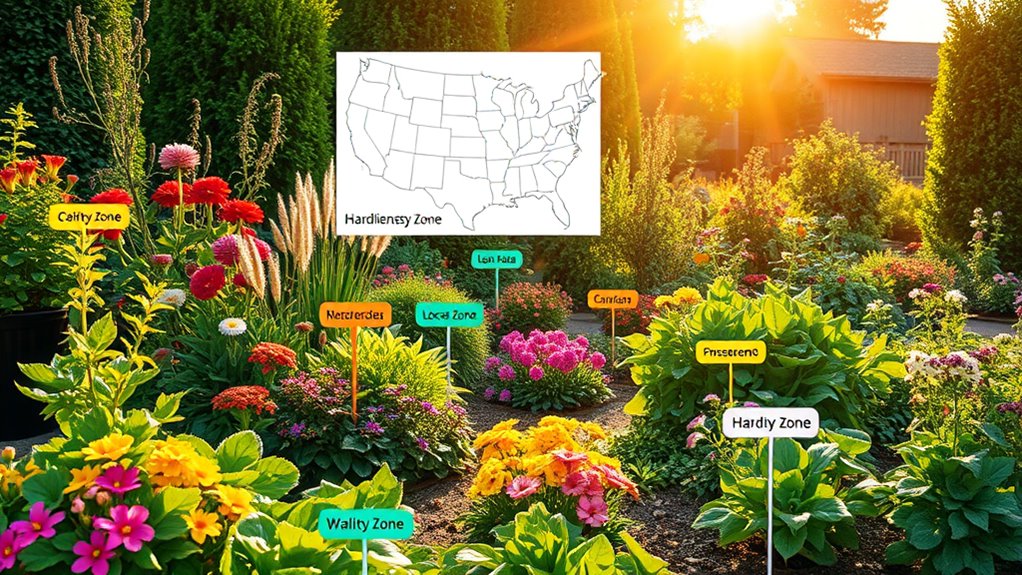
How can grasp of plant hardiness zones transform your gardening experience? By comprehending the USDA Plant Hardiness Zone Map, you can determine the average annual minimum temperatures for your area, which directly impacts plant survival. Each zone number guides you in selecting suitable plants that thrive under your local climate. Knowing your first and last frost dates helps you time your planting effectively, ensuring tender plants aren’t caught off guard by unexpected weather. Moreover, with climate change shifting many regions to warmer subzones, staying informed allows you to adapt your gardening choices. By recognizing these growing conditions, you’ll improve your garden’s success and create a flourishing environment for your plants.
Importance of Knowing Your Zone
Knowing your gardening zone is crucial for successful gardening, as it directly influences the types of plants you can cultivate. By grasping your hardiness zone, you can determine first and last frost dates, ensuring timely planting and protecting tender plants from frost damage. The USDA Plant Hardiness Zone Map, which ranges from Zones 1 to 13, helps you select plants based on average minimum temperatures. Each zone offers specific recommendations based on local climate conditions, maximizing your chances of success. Furthermore, being aware of your zone encourages you to reflect on microclimates, broadening your gardening options.
| Hardiness Zone | Average Minimum Temperature | Ideal Plants |
|---|---|---|
| Zone 5 | -20°F to -10°F | Peonies, Daylilies |
| Zone 7 | 0°F to 10°F | Tomatoes, Lavender |
| Zone 10 | 30°F to 40°F | Citrus, Bougainvillea |
Hardiness Zones by Region
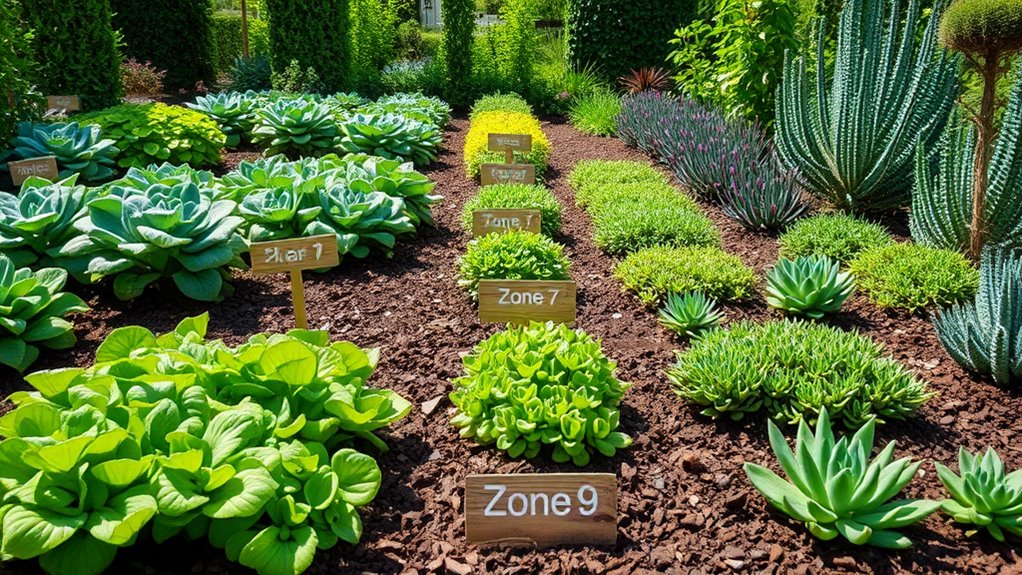
When planning your garden, comprehension of hardiness zones by region is essential for selecting the right plants. Each zone offers unique climate conditions that can greatly impact your gardening choices, from the cold of the North Central areas to the warmth of the Southeast. By knowing your local zone, you can pick plants that thrive in your specific environment, ensuring a flourishing garden. Find Growing Zone By Town to pinpoint your precise climate conditions. By knowing your local zone, you can pick plants that thrive in your specific environment, ensuring a flourishing garden.
Regional Plant Recommendations
Grasping your local climate zone is essential for selecting the right plants for your garden. Recognizing the USDA Hardiness Zone Map helps you make informed regional plant recommendations based on temperature extremes and growing seasons. Here are some plants to reflect upon for specific climate zones:
- North Central (Zones 2-5): Creeping thyme, coneflowers, clematis
- Northeast (Zones 1-7): Hellebore, sweet woodruff, shade-loving perennials
- Northwest (Zones 3-9): Climbing hydrangeas, black scallop bugleweed, hardy evergreens
- Southeast (Zones 7-10): Jasmine, lilyturf, heat-tolerant varieties
Climate Impact on Gardening
Comprehending how climate impacts gardening is crucial for making the most of your local environment. The USDA’s plant hardiness zones help you understand which plants thrive in your area, as each zone reflects a 10°F difference in average minimum winter temperatures. For instance, the Northeast (zones 1-7) is perfect for hardy perennials, whereas the Northwest (zones 3-9) supports cool, moist conditions ideal for evergreens. In the Southeast (zones 7-10), knowing last frost dates in April allows you to grow tropical plants. By grasping your local climate and temperature fluctuations, you can effectively plan when to plant, ensuring successful gardening outcomes season after season. Choose wisely, and you’ll see your garden flourish!
Popular Plants to Grow in Your Region
When planning your garden, it’s essential to choose plants that thrive in your specific climate zone. Each region has its own set of popular plants that can flourish under local conditions, from drought-resistant varieties in the Southwest to heat-tolerant perennials in the Southeast. Let’s explore some of the best options for your area!
Recommended Plants by Region
Choosing the right plants for your garden can make all the difference in your success as a gardener, especially when you consider your local climate zone. Here’s a quick rundown of recommended plants by region:
- Northwest: Hardy evergreens, flowering shrubs, and drought-resistant varieties like black scallop bugleweed.
- South Central: Native grasses, flowering perennials, and fruit trees such as creeping phlox and southern magnolia.
- Southeast: Tropical options like jasmine and heat-tolerant perennials such as lilyturf.
- North Central: Low-maintenance ground covers and native perennials like creeping thyme and coneflowers.
No matter where you live, selecting the right plants for your climate zone guarantees a flourishing garden customized to your environment. Happy gardening!
Climate-Specific Plant Choices
Comprehending which plants thrive in your specific climate zone can greatly improve your gardening experience. Choosing climate-specific plants guarantees they flourish throughout the growing season. Here are some of the Best Plants to Grow by region:
| Zone | Popular Plants |
|---|---|
| Northwest (3-9) | Hardy evergreens, Climbing hydrangeas |
| South Central (6-10) | Carolina jessamine, Crepe myrtle |
| Southeast (7-10) | Jasmine, Red maple |
| North Central (2-5) | Creeping thyme, Coneflowers |
| Southwest (3-10) | Avocado trees, Poppies |
Selecting low-maintenance ground covers and heat-tolerant varieties customized to your zone’s temperature ranges will make your garden thrive beautifully.
Understanding Your Climate and Growing Seasons
To successfully cultivate a thriving garden, you need to understand your local climate and growing seasons. Begin by analyzing average high and low temperatures throughout the year, which helps you identify the right planting dates. Here are some key points to evaluate:
- Cold season: average highs around freezing or below.
- Cool season: highs between 35°F and 64°F, perfect for frost-tolerant crops.
- Warm season: average highs from 65°F to 84°F, ideal for frost-sensitive plants.
- Hot season: temperatures exceeding 85°F, requiring specialized plants that can thrive in extreme heat.
Utilize USDA zone maps to determine your Plant Hardiness Zone, ensuring you choose the best plants for your climate and maximize your garden’s productivity across seasons.
Gardening Zones and Their Limitations
Despite gardening zones provide a helpful starting point for grasping plant hardiness, they often fall short in capturing the full spectrum of local growing conditions. The USDA Hardiness Zone Map relies mainly on average winter temperatures, neglecting daily temperature fluctuations and humidity levels that affect plant survival. Local climate factors like elevation, soil type, and microclimates can create significant variations in growing conditions. Relying solely on gardening zones may lead to poor plant choices, increasing the risk of garden failures. Although these zones indicate winter survival, they don’t account for vital aspects, such as summer heat or rainfall, which are critical for overall plant health. Recognizing these limitations will help you make more informed gardening decisions.
Analyzing and Understanding Your Growing Seasons
As you explore your local climate, knowledge of your growing seasons becomes essential for successful gardening. Start by analyzing average temperatures to identify seasonal characteristics. Label these ranges as cold, cool, warm, and hot for better insight. Here are a few key points to keep in mind:
- The cold season is mostly dormant for plants.
- The cool season’s ideal for planting frost-tolerant crops as soil becomes workable.
- The warm season is perfect for frost-sensitive plants.
- The hot season needs crops suited for temperatures above 85°F.
Remember to track last frost dates and utilize cold frames in cooler climates. Implement continuous planting strategies by timing crop removals to avoid bare soil, ensuring a thriving garden throughout the growing seasons.
Resources and Planning for Successful Gardening
When you’re ready to improve your gardening efforts, leveraging available resources can make a significant difference. Start by using the USDA Plant Hardiness Zone Map to identify your local climate, guiding you in selecting suitable plants. Access your local agricultural extension for customized advice on soil conditions and pest management. Download a planting calendar specific to your zone to determine ideal planting times and avoid frost damage. Incorporating season-extending techniques, like cold frames, can help protect your plants from unpredictable weather patterns. Finally, keep a gardening journal to track performance and climate variations, enhancing your future gardening strategies.
| Resource Type | Benefits | How to Access |
|---|---|---|
| USDA Plant Hardiness | Determines suitable plants | Online USDA website |
| Agricultural Extension | Customized gardening guides | Local extension office |
| Planting Calendar | Ideal planting and harvesting times | Download from gardening websites |
Frequently Asked Questions
How Do You Find Your Zone for Gardening?
To find your gardening zone, start by checking the USDA Plant Hardiness Zone Map using your zip code. This’ll give you your specific climate zone and temperature ranges, which are essential for garden planning. Consider local plants that thrive in your zone and pay attention to seasonal changes, frost dates, and soil types. Don’t forget to look for microclimates in your area, as they can impact your garden’s success with plant hardiness.
Where Is Zone 7 in the USA?
Zone 7 in the USA covers a vast area, like a gardener’s paradise where the climate impact creates perfect conditions for diverse local flora. You’ll find it in parts of the Mid-Atlantic, including Washington D.C., and the Pacific Northwest. With gardening tips customized to this zone, you can thrive by focusing on seasonal planting, native species, and comprehending weather patterns, all during enhancing soil quality and practicing sustainable pest management and crop rotation.
Is Zone 5 or 6 Colder?
Zone 5 is colder than Zone 6, with temperature ranges that can dip to -20°F. This significant difference in zone characteristics affects plant hardiness, so you’ll need to choose tougher plants that can withstand harsher winters. Furthermore, consider frost dates and winter preparation for your garden. Soil types and potential microclimates can likewise impact your growing seasons. Emphasizing native plants and following practical gardening tips will help you thrive in Zone 5.
Where Are Zones 9 and 10 in the United States?
Did you know that zones 9 and 10 have average minimum winter temperatures ranging from 20°F to 40°F? These regions mainly include southern California, Florida, and southern Texas. Grasping the climate impact here is crucial for gardening success. You’ll want to reflect on plant selection based on seasonal variations, soil types, and drought resistance. Moreover, managing pests and incorporating native species can improve your garden’s resilience against temperature extremes. Happy gardening!
