
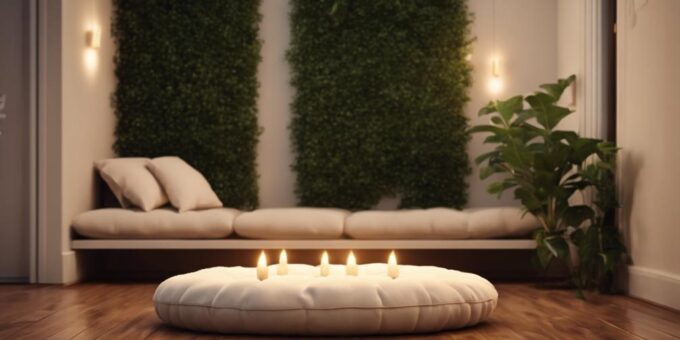
Creating a meditation space in your home requires intentional design and attention to detail. Start by selecting a quiet and private area that fosters tranquility and contemplation. Choose a comfortable seating option, such as a chair or cushion, that provides proper back support for a quality meditation practice. Consider incorporating calming colors and textures, as well as soothing lighting elements like candles or essential oil diffusers. Minimize clutter and distractions, and bring in natural elements like plants or a small water feature to enhance the ambiance. As you design your meditation space, remember that every detail counts in creating an environment that cultivates mindfulness and relaxation, and there's more to explore to create the perfect sanctuary.
Choose a Quiet and Private Area
Situated in a quiet and private area, a meditation space can foster an atmosphere of tranquility and contemplation, allowing you to fully immerse yourself in the meditation practice. This setting enables you to disconnect from distractions and distractions, creating a conducive environment for introspection and self-reflection. A quiet space also allows you to better focus on your breath, body sensations, and mental states, leading to a deeper understanding of yourself and your emotions. Incorporating meditation for mental health into your daily routine within this serene space can help reduce stress, improve emotional well-being, and enhance overall mindfulness. Over time, this dedicated environment can serve as a sanctuary where you cultivate inner peace and resilience, making it easier to manage anxiety and negative thoughts. By consistently practicing meditation for mental health in a quiet and private setting, you can develop greater self-awareness and emotional balance.
When selecting a quiet and private area, consider the layout and architecture of your home. Avoid areas with high foot traffic, noisy appliances, or proximity to busy streets. Instead, opt for a space that provides a sense of seclusion and calmness. This could be a corner of a room, a small alcove, or even a designated meditation room. By choosing a quiet and private area, you can create an ideal setting for meditation, allowing you to cultivate mindfulness, reduce stress, and enhance your overall well-being.
Select a Comfortable Seating Option
When deliberating on a comfortable seating option for your meditation space, it's essential to ponder the importance of proper back support. You'll need to choose between using a chair, cushion, or floor or platform seating, each with its unique benefits and drawbacks. By carefully assessing these options, you can create a meditation space that promotes relaxation and comfort.
Back Support Options
Regularly, individuals who meditate at home often overlook the significance of proper back support, which can greatly impact the overall quality of their meditation practice. This aspect is vital, as it directly affects the comfort and posture of the practitioner, ultimately influencing their ability to focus and relax. A well-supported back enables individuals to maintain a straight spine, reducing discomfort and promoting a deeper state of meditation.
When selecting a seating option, it is essential to take into account the lumbar region, which requires adequate support to prevent strain and fatigue. A curved or contoured backrest can provide the necessary support, ensuring that the natural curvature of the spine is maintained. Additionally, adjustable features, such as tilt mechanisms or reclining functions, can be beneficial in finding a comfortable position that accommodates the individual's unique needs. By prioritizing back support, individuals can cultivate a more effective and enjoyable meditation practice that fosters physical and mental well-being.
Chair or Cushion
One of the most critical decisions when creating a meditation space at home is selecting a comfortable seating option, which can be achieved by choosing between a chair and a cushion, each offering unique benefits and drawbacks. Choosing the right seating option can have a considerable impact on the quality of your meditation practice, as it directly affects your physical comfort and mental focus.
When deciding between a chair and a cushion, consider the following factors:
- Ergonomic support: Chairs often provide better back support, which can be beneficial for those with back issues.
- Flexibility: Cushions allow for more flexibility regarding posture and movement, which can be beneficial for those who prefer to switch between sitting and kneeling positions.
- Portability: Cushions are generally lighter and more portable, making them ideal for meditation spaces that need to be set up and taken down frequently.
- Personal preference: Ultimately, the choice between a chair and a cushion comes down to personal preference and what feels most comfortable for you.
Floor or Platform
A dedicated meditation space can benefit from a well-chosen floor or platform, which serves as a foundation for your seating option and helps create a sense of grounding and stability. This foundation can greatly impact your meditation experience, as it provides a solid base for your chosen seating option. When selecting a floor or platform, consider the type of seating you plan to use and the comfort level you desire.
For those who prefer to sit on a cushion, a hardwood or bamboo floor can provide a sturdy surface. If you prefer to use a chair, a low-pile carpet or a rug can add warmth and texture to the space. A platform can also be used to elevate your seating option, creating a sense of separation from the rest of the room. Ultimately, the floor or platform you choose should support your meditation practice and promote a sense of calm and focus. By thoughtfully selecting a floor or platform, you can create a meditation space that fosters relaxation and inner peace.
Add Calming Colors and Textures
When creating a meditation space at home, the incorporation of calming colors and textures is essential in fostering a serene atmosphere. The strategic use of soothing hues, calming fabrics, and nature-inspired accent colors can greatly impact the ambiance of the space, promoting relaxation and tranquility. By thoughtfully selecting these elements, individuals can craft a meditation space that nurtures mindfulness and inner peace.
Soothing Hues for Walls
Incorporating soothing hues on walls is an essential aspect of creating a meditation space, as it sets the tone for a calming and peaceful atmosphere. The colors you choose can have a substantial impact on the ambiance of the room, influencing your mental and emotional state.
For a meditation space, it's essential to select hues that promote relaxation and serenity. Consider the following options:
- Light Blue: Associated with feelings of calmness and tranquility, light blue can help reduce stress and anxiety.
- Mint Green: This soft, pastel shade can evoke feelings of balance and harmony, creating a sense of calm.
- Soft Gray: A neutral tone that can help quiet the mind and promote a sense of clarity.
- Taupe: A warm, earthy shade that can bring a sense of grounding and stability to the meditation space.
Calming Fabrics to Touch
As you curate your meditation space, surround yourself with calming fabrics that invite gentle touch, combining soothing colors with textures that whisper serenity. Soft, plush fabrics like velvet, fleece, or Sherpa can create a cozy atmosphere, while natural fibers like cotton, linen, or bamboo provide a sense of earthiness. Consider incorporating fabrics with subtle patterns, such as gentle florals or soft geometrics, to add visual interest without distraction.
When selecting fabrics, prioritize tactile experience. Choose materials that feel comforting against the skin, like silk, cashmere, or soft wool. These textures can help calm the mind and promote relaxation. Consider adding throw blankets, pillows, or even a meditation cushion wrapped in calming fabrics to create an inviting space. By incorporating these calming fabrics, you'll create a sensory experience that nurtures both body and mind, fostering a deeper sense of tranquility in your meditation space.
Nature-Inspired Accent Colors
By introducing nature-inspired accent colors, you can subtly evoke the calming effects of the natural world, bringing a sense of serenity and balance to your meditation space. These colors can help create a sense of calm and tranquility, allowing you to focus on your meditation practice.
Some nature-inspired accent colors to contemplate include:
- Sage green, reminiscent of a forest glade
- Sandy beige, evoking the warmth of a desert landscape
- Driftwood gray, recalling the weathered wood of a windswept beach
- Mossy stone, bringing to mind the lushness of a forest floor
These colors can be incorporated into your meditation space through accent pillows, wall hangings, or even a statement piece of furniture. By incorporating these calming hues, you can create a peaceful atmosphere that invites relaxation and contemplation.
Minimize Clutter and Distractions
One of the most critical steps in creating a meditation space at home is to eliminate clutter and distractions, as they can greatly impede your ability to focus and relax. A cluttered and noisy environment can make it challenging to quiet the mind and achieve a state of inner peace. To minimize distractions, consider the following strategies:
| Distraction | Solution | Benefits |
|---|---|---|
| Cluttered space | Remove unnecessary items, organize belongings | Reduces visual stimuli, promotes calmness |
| Electronic notifications | Turn off notifications, use a phone app blocker | Minimizes auditory distractions, reduces stress |
| Uncomfortable seating | Invest in a comfortable meditation cushion or chair | Encourages longer meditation sessions, reduces physical discomfort |
Incorporate Soothing Lighting Elements
With a distraction-free environment established, the next step is to cultivate a calming ambiance through the deliberate use of soothing lighting elements that promote relaxation and serenity. Lighting plays an essential role in creating a peaceful atmosphere, and making intentional choices can greatly impact the ambiance of your meditation space.
To create a serene ambiance, consider incorporating the following soothing lighting elements:
- Table lamps with soft shades to provide warm, gentle light
- String lights or fairy lights to create a calming glow
- Candles or essential oil diffusers with calming scents like lavender or chamomile
- Dimmable overhead lighting to adjust the brightness to your liking
Bring in Nature and Plants
How can the incorporation of natural elements and plants enhance the calming atmosphere of your meditation space? By bringing in elements of nature, you create a sense of serenity and tranquility, allowing you to unwind and focus on your meditation practice. Adding plants, in particular, has been shown to have numerous benefits, including reducing stress and anxiety, improving air quality, and even lowering blood pressure.
Choose low-maintenance plants like succulents or air plants that fit seamlessly into your meditation space. Consider adding a small water feature, such as a fountain or waterfall, to create a calming background noise. You can also incorporate natural elements like stones, shells, or driftwood to create a sense of connection to the outdoors. By incorporating these natural elements, you'll create a peaceful and calming environment that fosters mindfulness and relaxation. This, in turn, will help you cultivate a deeper sense of awareness and inner peace during your meditation practice.
Use Sound to Create Calm
Sixty-seven percent of Americans report feeling anxious or stressed daily, and incorporating calming sounds into your meditation space can help mitigate this pervasive issue. By introducing soothing sounds, you can create a more peaceful environment that fosters relaxation and calmness.
To create a calming atmosphere, consider incorporating the following sounds into your meditation space:
- Rainfall or ocean waves: Calming water sounds can evoke feelings of serenity and tranquility.
- Nature sounds: Bird songs, gentle breezes, or rustling leaves can transport you to a peaceful outdoor setting.
- Instrumental music: Soft, slow melodies can help quiet the mind and promote relaxation.
- White noise: Gentle hums or whispers can help mask background distractions and create a sense of calm.
Add Aromatherapy for Relaxation
Incorporating aromatherapy into your meditation space can have a profound impact on relaxation, as certain scents have been shown to calm the mind and soothe the body. Essential oils, in particular, have been found to have a significant effect on reducing stress and anxiety. Lavender, chamomile, and bergamot are popular choices for promoting relaxation and calming the nervous system. You can incorporate these oils into your meditation space through the use of diffusers, candles, or room sprays.
When selecting essential oils, consider the specific benefits you wish to achieve. For example, peppermint can help increase focus and mental clarity, while ylang-ylang can promote feelings of calmness and self-love. You can also experiment with blending different oils to create a unique scent that resonates with you. Remember to always dilute essential oils in a carrier oil and use them in moderation to avoid overwhelming the senses. By incorporating aromatherapy into your meditation space, you can create a more immersive and relaxing experience that nurtures both body and mind.
Make It Technology-Free Zone
By designating your meditation space as a technology-free zone, you can eliminate distractions and create an environment that fosters mindfulness and self-reflection. This is essential in today's digital age, where notifications and alerts can be significant obstacles to achieving a peaceful state.
By creating a technology-free zone, you can:
- Reduce mental clutter and minimize digital distractions
- Create a sense of calm and tranquility, conducive to meditation and self-reflection
- Encourage mindfulness and presence, allowing you to focus on your breath and inner thoughts
- Establish a healthy boundary between your personal and digital life, promoting a sense of balance and well-being
Frequently Asked Questions
Can I Convert a Closet Into a Meditation Space?
Converting a closet into a meditation space is a feasible option. With careful planning, a small, enclosed area can be transformed into a peaceful retreat. Remove any shelving or rods, and consider installing a sliding door or curtain to create a sense of separation. Utilize vertical space by adding a wall-mounted meditation seat or a floor-to-ceiling storage unit for cushions and props.
How Do I Keep My Meditation Space Organized and Clutter-Free?
Maintaining a clutter-free meditation space is vital for a peaceful and focused practice. To achieve this, designate a specific area for meditation essentials, such as cushions, mats, and guided meditation materials. Implement a 'one in, one out' policy to prevent accumulation of unnecessary items. Schedule regular tidying sessions to guarantee the space remains organized and conducive to mindfulness. This intentional approach will foster a serene atmosphere, allowing you to fully immerse yourself in meditation.
Can I Use a Meditation Space for Yoga or Other Activities?
Can a meditation space be relegated to a single purpose, or can it serve as a multifaceted hub for various wellness practices? Absolutely. Your meditation space can seamlessly double as a yoga studio, reading nook, or even a quiet workspace. By incorporating versatile, minimalist decor and adaptable seating, you can create a tranquil atmosphere conducive to a wide range of activities, fostering a deeper sense of calm and inner peace.
Are There Any Specific Meditation Space Layout Requirements?
When designing a meditation space, layout considerations are important. A calm and peaceful atmosphere is fostered by a thoughtful arrangement of elements. Opt for a balanced and symmetrical layout, with a focal point, such as a Buddha statue or a meditation altar, placed centrally. Make sure a clear path for circulation and position seating in a way that promotes introspection and calmness.
Can I Share My Meditation Space With Family Members or Roommates?
Sharing a meditation space with family members or roommates can be challenging, but not impossible. To make it work, establish clear boundaries and guidelines for usage. Designate specific meditation times or schedule slots to avoid conflicts. Consider using a screen, curtain, or divider to create a sense of separation when others are present. Open communication and mutual respect are key to successfully sharing a meditation space.
