
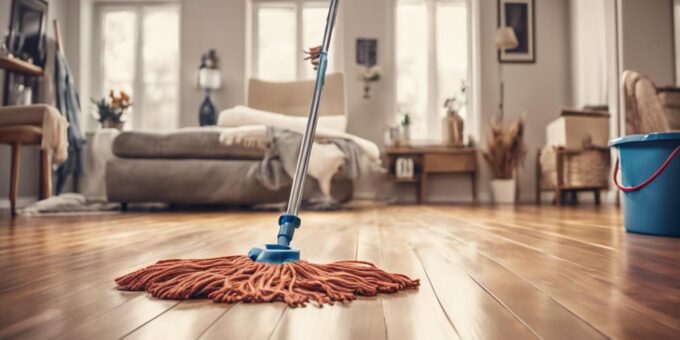
To maintain your hardwood floors, establish daily cleaning habits, including sweeping, dusting, and dusting in the direction of the wood grain. Control humidity levels between 35-55% to prevent damage. Avoid excessive water exposure, and use specific cleaning solutions and damp mops. Regular polishing enhances appearance, durability, and longevity. Protect your floors from direct sunlight and rotate furniture to reduce wear. Inspect your floors regularly to catch minor issues early and address damage promptly. By following these essential tips, you'll be well on your way to preserving the beauty and longevity of your hardwood floors, and there's more to discover about keeping your floors looking their best.
Daily Cleaning Habits
Regular sweeping and dusting are vital daily habits to remove dirt and debris that can scratch or dull the finish of your hardwood floors. These simple yet essential tasks help maintain the beauty and longevity of your floors. For effective sweeping, use a soft-bristled broom or a dust mop, working in sections to trap dirt and dust particles. This prevents scratches and allows for a more efficient cleaning process.
Dusting is equally important, as it removes fine particles that can dull the finish over time. Use a microfiber mop or a soft cloth to dust your hardwood floors, working in the direction of the wood grain. Avoid using too much water, as excessive moisture can damage the wood or the finish. By incorporating these daily habits into your routine, you'll be able to enjoy your beautiful hardwood floors for years to come. Establishing a regular cleaning schedule helps maintain the appearance and integrity of your floors, ensuring they remain a stunning focal point in your home.
Removing Stains and Scratches
Removing stains and scratches from hardwood floors requires a thoughtful and methodical approach. To effectively address these imperfections, it is essential to identify the source of the stain, assess the severity of the scratch, and choose the appropriate repair method. By following these steps, homeowners can restore their hardwood floors to their original beauty.
Identify Stain Sources
Identifying the source of a stain is vital to determining the best method for removing it, as different substances require distinct approaches to eliminate them effectively. For instance, oil-based stains, such as those caused by grease or ink, typically require a solvent-based cleaner, whereas water-based stains, like those caused by food or drink spills, may respond better to a mild detergent and water solution.
It is essential to examine the stain closely to determine its origin. Check for any visible signs, such as color, texture, or odor, that can provide clues about the substance that caused the stain. If the stain is particularly stubborn, it may be necessary to perform some trial and error to determine the most effective removal method. Additionally, it is vital to act quickly when addressing stains, as the longer they are allowed to sit, the more difficult they can be to remove. By identifying the source of the stain, homeowners can make sure that they use the most effective removal method, minimizing the risk of damaging their hardwood floors.
Assess Scratch Severity
The importance of a scratch on a hardwood floor is a vital factor in determining the most efficient method of repair, as it can greatly influence the overall appearance and integrity of the flooring. To accurately evaluate scratch significance, inspect the scratch closely, taking note of its length, width, and depth. Minor scratches, often referred to as 'micro-scratches,' are superficial and only affect the finish. These can usually be easily remedied with a simple touch-up or refinishing.
More severe scratches, on the other hand, can expose the wood itself, making them more challenging to fix. In such cases, it's essential to analyze the extent of the damage to determine the best course of action. Consider the color and texture of the surrounding wood, as well as the type of finish used, to ensure a seamless repair. By carefully evaluating the severity of the scratch, you can choose the most effective repair method, guaranteeing a successful and long-lasting fix that maintains the beauty and integrity of your hardwood floor.
Choose Repair Methods
Frequently, successful scratch repair involves selecting the most suitable technique from a range of methods, each tailored to specific types of damage and finishes. For minor scratches, a simple scratch remover or a wood floor touch-up pen can effectively conceal imperfections. For more pronounced scratches, a scratch repair kit or a wood filler may be necessary. These products typically consist of a wood filler and a stain that matches the original floor color.
For deeper scratches or those that expose the wood substrate, a more extensive repair may be required. In such cases, a wood filler or a putty stick can be used to fill the scratch, followed by sanding and refinishing. Additionally, for scratches that have removed the finish, a new coat of polyurethane or wax may need to be applied to protect the wood and restore its original appearance. When refinishing, it’s important to match the existing color and sheen as closely as possible to ensure a seamless repair. In some cases, mixing different wood finishes can help achieve the best match, especially if the original finish has aged or changed over time. Proper blending and careful application will help restore the surface while maintaining a natural and cohesive look.
When opting for a repair method, it is essential to contemplate the type of finish, the severity of the scratch, and the desired outcome. By selecting the most suitable technique, homeowners can effectively remove scratches and stains, restoring their hardwood floors to their original beauty.
Humidity Control Is Key
Maintaining ideal humidity levels is vital to the longevity of hardwood floors. Wood is a natural material that responds to changes in humidity, expanding and contracting accordingly. To prevent warping, cracking, or other damage, it is essential to establish and maintain an ideal humidity range.
Ideal Humidity Range
Operating within a narrow humidity range of 35-55% is vital for hardwood floors, as excessive moisture can cause warping, cupping, or cracking, while dry air can lead to shrinkage and gaps. This ideal range allows the wood to maintain its natural state, minimizing the risk of damage. When the humidity level drops below 35%, the wood contracts, causing shrinkage and gaps between boards. Conversely, when the humidity level exceeds 55%, the wood absorbs excess moisture, leading to warping and cupping. Maintaining the ideal humidity range ensures the wood remains stable, reducing the likelihood of costly repairs. It is essential to maintain a consistent humidity level, especially in regions with extreme climate fluctuations. By doing so, you can safeguard the longevity and beauty of your hardwood floors. Additionally, this range helps to prevent the growth of mold and mildew, creating a healthier environment for occupants.
Monitor Humidity Levels
By installing a humidistat or hygrometer, homeowners can accurately monitor humidity levels, guaranteeing a stable environment that prevents damage to their hardwood floors. This proactive approach allows homeowners to take corrective action before issues arise.
Monitoring humidity levels is vital, as excessive humidity can cause wood to expand, leading to buckling or warping, while dry air can cause shrinkage and cracking.
Here are three essential considerations when monitoring humidity levels:
- Seasonal adjustments: Adjust humidity levels according to seasonal changes to maintain a stable environment.
- Room-specific monitoring: Monitor humidity levels in each room, as levels can vary significantly depending on factors like sunlight and ventilation.
- Regular calibration: Regularly calibrate your humidistat or hygrometer to ensure accurate readings and prevent false alarms.
Avoid Using Too Much Water
Excessive water exposure is a common mistake that can lead to warping, discoloration, and damage to the finish of your hardwood floors. This can occur when cleaning the floors with too much water or using excessive amounts of cleaning solution. To avoid water damage, it's essential to clean your hardwood floors with a cleaning solution specifically designed for hardwood floors.
When cleaning, use a mop or cleaning pad that is slightly damp, not soaking wet. Avoid using excessive amounts of cleaning solution, and make sure to dry the floors thoroughly with a clean towel after cleaning. Additionally, clean up spills immediately to prevent water from seeping into the wood.
Regular Polishing Is Necessary
Protection of the hardwood floor's finish relies heavily on regular polishing, as it helps maintain the floor's appearance and durability by filling in microscopic scratches and shielding the wood from damage. Regular polishing is essential to maintain the floor's luster and prevent scratches from becoming deeper and more noticeable. By polishing regularly, you can extend the life of your hardwood floor and reduce the need for costly repairs.
Here are three key benefits of regular polishing:
- Enhances appearance: Polishing enhances the floor's natural beauty, restoring its original shine and luster.
- Protects the finish: Polishing helps to maintain the integrity of the finish, shielding it from damage caused by foot traffic, spills, and scratches.
- Reduces maintenance: Regular polishing reduces the need for frequent cleaning and maintenance, saving you time and effort in the long run.
Protect From Direct Sunlight
While consistent polishing is essential for maintaining the appearance and integrity of a hardwood floor's finish, it's equally important to address another critical factor that can compromise the floor's durability: direct sunlight. Prolonged exposure to direct sunlight can cause hardwood floors to fade, discolor, or become brittle. This can lead to cracks, warping, or cupping, which can be costly to repair. To protect your hardwood floor from direct sunlight, consider installing window treatments such as curtains, blinds, or shades. These can help filter or block direct sunlight, reducing its damaging effects. Additionally, applying a UV-resistant finish or using a UV-blocking window film can provide an extra layer of protection. By taking these measures, you can guarantee your hardwood floor remains in excellent condition, maintaining its beauty and functionality for years to come.
Rotate Furniture for Even Wear
Regularly rotating furniture pieces can help distribute the wear and tear on your hardwood floor more evenly, preventing unsightly scratches and divots that can mar its appearance. This simple practice can make a significant difference in the overall look and longevity of your floor. By rotating furniture, you can guarantee that the weight and traffic are spread out, reducing the risk of uneven wear.
To incorporate this practice into your maintenance routine, consider the following:
- Identify high-traffic areas: Focus on rotating furniture in areas that receive heavy foot traffic or where furniture is subject to frequent movement.
- Rotate every 6-12 months: Schedule regular rotations to maintain even wear and prevent unsightly scratches and divots.
- Keep an eye on furniture legs: Make sure that furniture legs are equipped with felt pads or coasters to reduce scratching and scuffing.
Seasonal Maintenance Tasks
As the seasons change, so too do the needs of your hardwood floor, necessitating adjustments to your maintenance routine to guarantee its continued beauty and longevity. During the winter months, increased humidity can cause wood to expand, while dry air in the summer can cause it to contract. To combat these effects, adjust your cleaning routine accordingly. In the winter, reduce the frequency of wet cleaning to prevent excess moisture from seeping into the wood. Conversely, in the summer, use a humidifier to maintain a stable humidity level.
Additionally, seasonal changes can bring about changes in foot traffic and usage. During the winter, salt and snow can damage the finish, so be sure to clean up any spills promptly. In the summer, increased outdoor activities can lead to dirt and debris being tracked onto the floor, making regular sweeping and cleaning essential. By adapting your maintenance routine to the changing seasons, you can make sure your hardwood floor remains in optimal condition.
Inspect for Damage Regularly
To guarantee the longevity of your hardwood floor, it is essential to incorporate regular inspections into your maintenance routine, allowing you to identify and address any damage before it becomes a more extensive and costly problem. Regular inspections can help you catch minor issues before they escalate into major problems, saving you time, money, and stress in the long run.
During your inspections, be sure to look for the following:
- Scratches and dents: Check for any scratches, dents, or gouges on the surface of your hardwood floor. These can be addressed with a simple touch-up or repair.
- Water damage: Inspect for any signs of water damage, such as warping, buckling, or discoloration. Addressing water damage promptly can prevent further damage and costly repairs.
- Fading or discoloration: Check for any areas where the finish may be fading or discoloring, indicating the need for a refinish or touch-up.
Frequently Asked Questions
Can I Use a Steam Mop on My Hardwood Floors?
The age-old adage "an ounce of prevention is worth a pound of cure" rings especially true when it comes to caring for hardwood floors. Regarding the question of using a steam mop on these surfaces, it's generally not recommended. Steam can damage the wood and compromise its finish, leading to costly repairs. Instead, opt for gentle, dry cleaning methods to preserve the integrity and beauty of your hardwood floors.
How Often Should I Refinish My Hardwood Floors?
The frequency of refinishing hardwood floors depends on usage and traffic. On average, high-traffic areas may require refinishing every 10-15 years, while low-traffic areas can go 20-30 years between refinishing. Factors such as scratches, fading, and wear also influence the need for refinishing. Regular maintenance, including cleaning and polishing, can extend the time between refinishing. It's essential to inspect floors regularly to determine the best refinishing schedule for your specific situation.
Are Area Rugs Bad for Hardwood Floors?
Imagine a delicate dance between a beautiful hardwood floor and an area rug, where the rug's fibers gently caress the wood, but also harbor hidden dangers. While area rugs can add warmth and style, they can also trap moisture, dirt, and debris, causing damage to the hardwood. In fact, a study found that 70% of hardwood floor damage is caused by moisture trapped under rugs. To avoid this, regularly clean and dry the rug, and consider using a breathable underlayment to allow air to circulate beneath.
Can I Use a Wet/Dry Vacuum on My Hardwood Floors?
When contemplating the use of a wet/dry vacuum on hardwood floors, it's important to exercise caution. While these vacuums can be effective at removing liquid spills, they can also potentially damage the finish or wood itself if not used correctly. To minimize risk, make sure the vacuum is set to a low suction setting and avoid using the beater brush, as it can scratch the surface.
Do I Need to Acclimate My Hardwood Floors Before Installation?
What would happen if you installed hardwood floors without acclimating them to the environment? The consequences could be disastrous. Acclimating hardwood floors before installation is vital to guarantee a successful and long-lasting installation. This process allows the wood to adjust to the humidity and temperature of the room, reducing the risk of shrinkage, warping, or cracking. Proper acclimation can take several days to weeks, depending on the species and environmental conditions.
